
Mobile Surveillance Trailers and Security Lighting
Start with the site’s main task when specifying mobile lighting for security: illuminating an area, observing it with cameras, or combining both. Prepare the lighting, camera, recording, network and power requirements together before requesting equipment pricing.
Use this page to define a project enquiry for a mobile surveillance trailer, an off-grid security light tower or a custom hybrid light tower with CCTV. Describe the area, operating schedule and destination, and identify equipment you already own. The quotation should state the proposed components and who supplies, configures and operates each part of the system.
Home · Request a security-project quote · Help Me Choose a Configuration
Mobile surveillance units, security camera trailers and surveillance towers
A mobile surveillance unit is a general term for a relocatable monitoring setup. A security camera trailer is a towable version that carries a mast and camera equipment. “Surveillance tower” can also describe a raised camera platform; the name alone does not define its power supply, recording equipment or connectivity. Compare the solar surveillance trailer range for sale by the actual equipment included in each quotation.
For a model-specific starting point, review the S973 surveillance trailer and the H673 surveillance trailer. State the camera, network, power and deployment requirements so the proposed configuration can be checked for your site.
Choose the platform for the main task
Separate the lighting task from the monitoring task so suppliers can review the appropriate equipment and interfaces.
| Main requirement | Equipment route | Inputs to provide |
|---|---|---|
| Illuminate a work area, access route or perimeter | Solar mobile lighting towers | Area, lighting objective, nightly hours, site conditions and charging arrangements |
| Observe areas, record images or view cameras remotely | Solar surveillance trailers | Observation areas, camera requirements, recording, network access and power reserve |
| Combine lighting and cameras | Project configuration review | All connected equipment, lighting positions, camera views, operating schedules and interfaces |
The S963 and S973 provide two model routes for solar-powered surveillance projects. Review the S963 solar mobile surveillance trailer or the S973 surveillance trailer, then confirm the camera, communications, mast, solar and battery package for the quoted version. PTZ means pan, tilt and zoom; a product-family label alone does not confirm a particular camera package.
For a project that combines lighting, cameras and diesel backup, review the H977 solar-diesel hybrid light tower as a standard model route and request a separate custom configuration when surveillance equipment is required. Do not copy a custom project specification into the standard H977 schedule.
List any cameras, recorder or router you plan to supply yourself. Ask which mounts, power connections, network interfaces and software are compatible. Include future equipment additions in the enquiry so they can be considered in the proposed system scope.
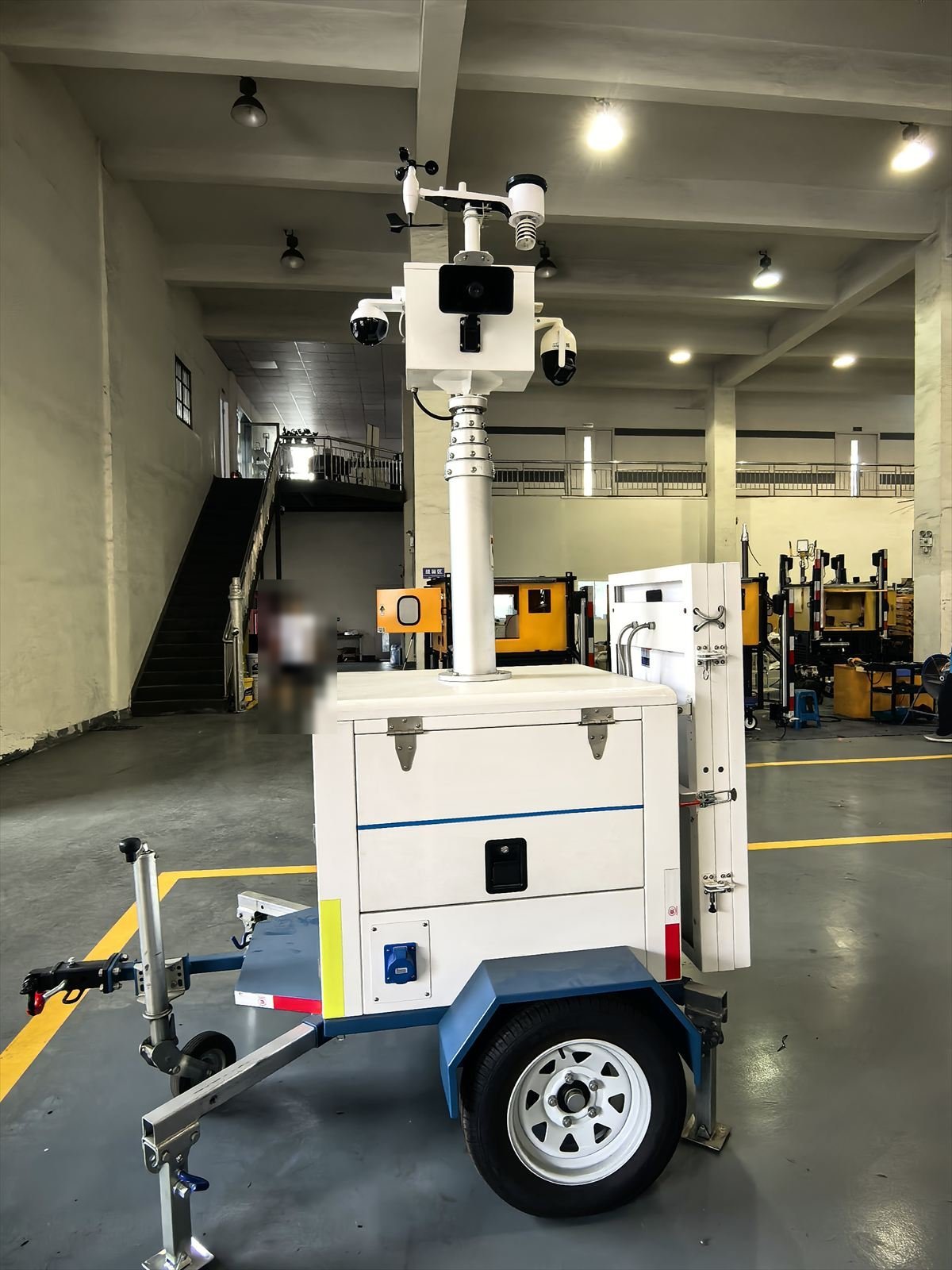
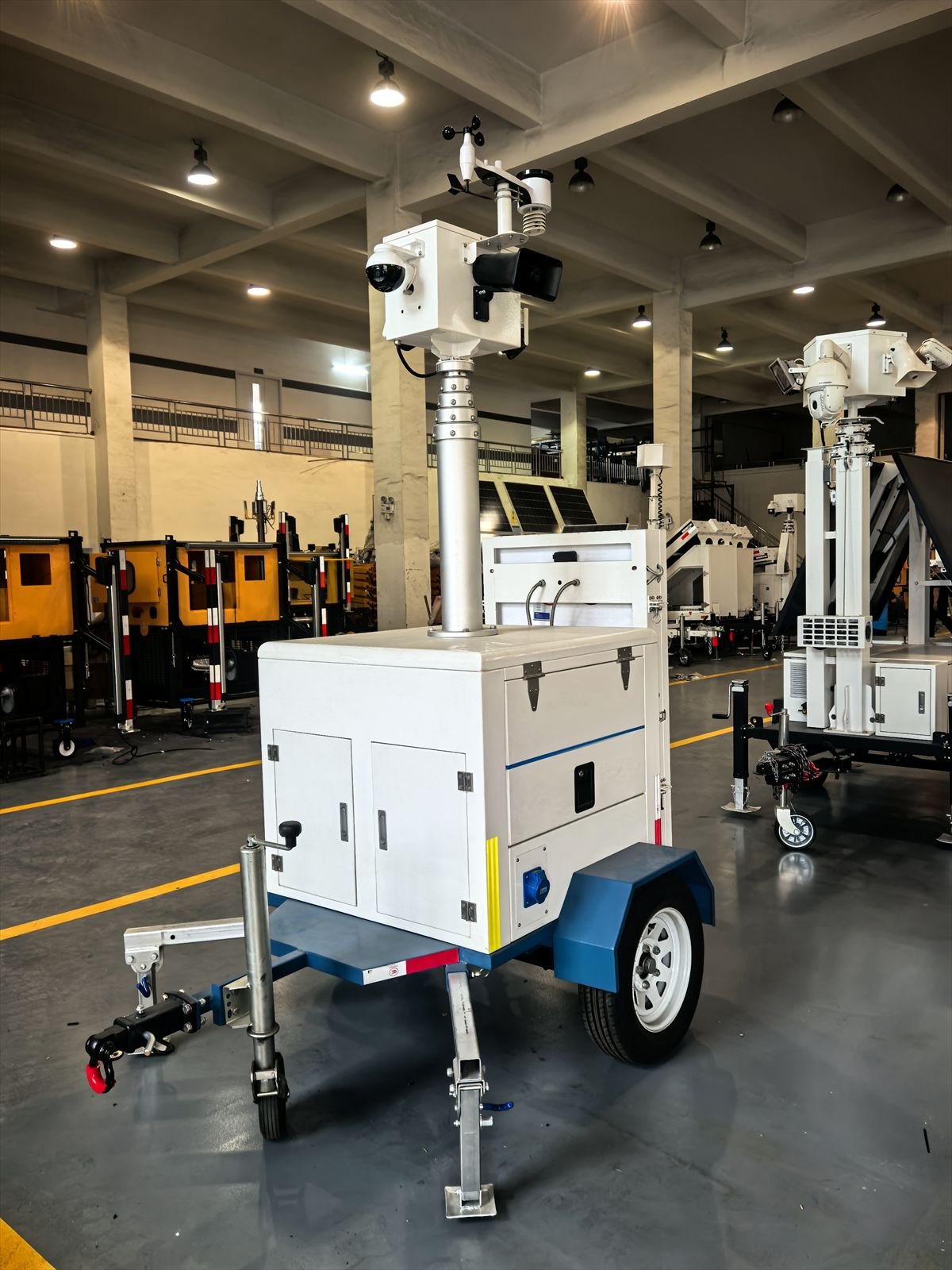
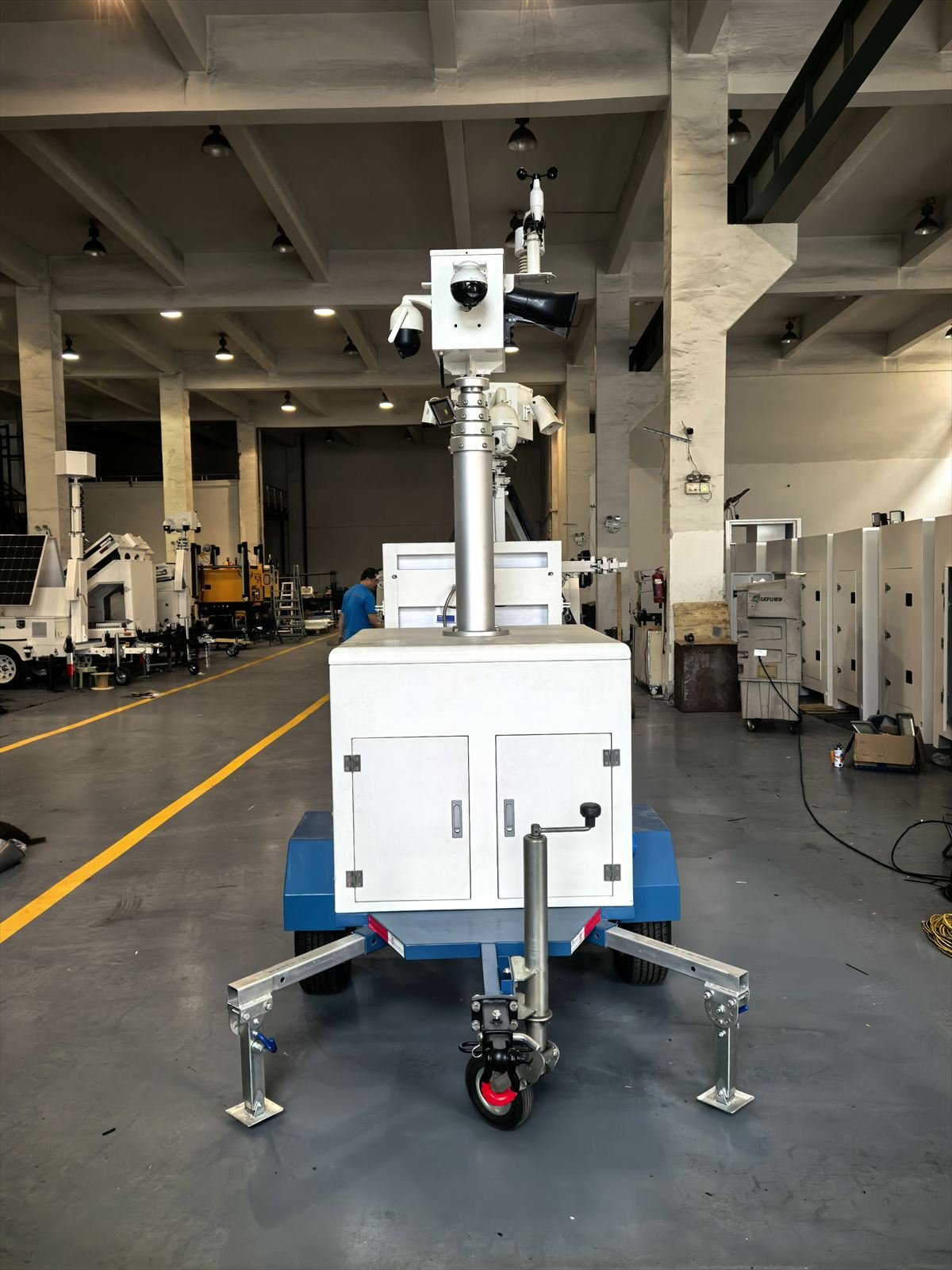
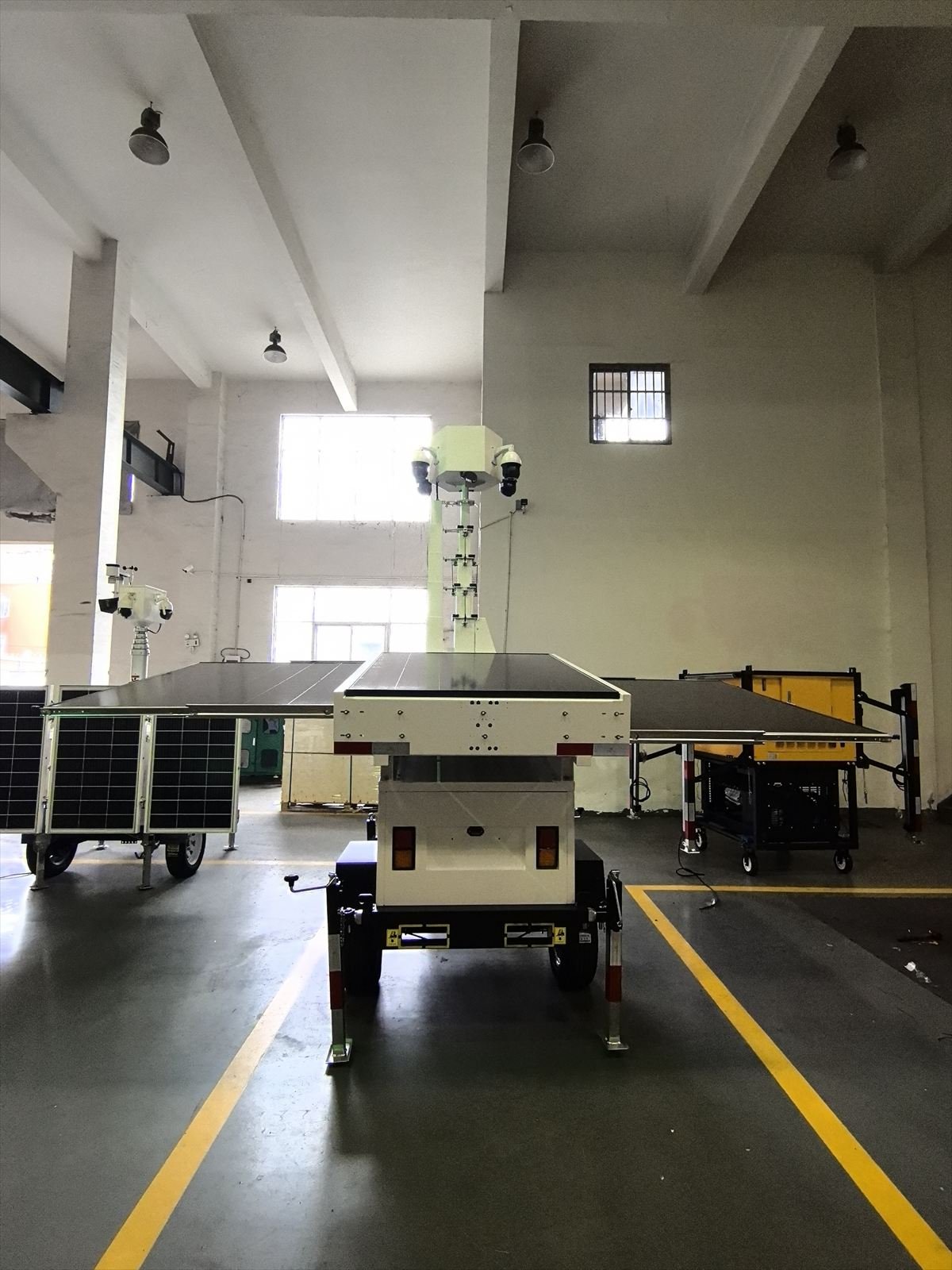
Surveillance trailers from our factory
LUMTA surveillance trailers with camera masts, solar panels and optional weather sensors. Equipment is specified per project.


A signed hybrid lighting and surveillance sample project
LUMTA has signed a sample-project contract for an anonymous Middle East defense customer requiring mobile lighting and remote surveillance on one platform. The project reference includes a 12 m electric mast and a project-specific cooling and compartment concept. It is evidence of one confirmed customer requirement, rather than proof that every security project needs the same configuration.
Review the Middle East hybrid lighting and surveillance sample project to see the stated project scope and design boundaries. For a comparable enquiry, provide the camera views, lighting schedule, mast height, communications method, ambient-temperature range, quantity and destination.
Define the observation and lighting objectives
Provide a site sketch showing entrances, perimeter sections, stored equipment and work areas. Mark the locations you need to illuminate or observe, the distances involved, obstacles and possible mounting positions. State whether the monitoring task is a general overview or viewing particular details at a named location.
For night-time use, describe the required camera images and any separate work-area lighting. Ask the proposal to address camera orientation, lighting positions, reflections and glare. Request a way to review the proposed views under the agreed conditions; a camera count or lamp rating alone does not answer whether those views meet your task.
Include relocation frequency, ground conditions, access, temperature, dust and wind exposure. Use the surveillance trailer site survey checklist to organize the information. Identify unknown site details in your enquiry so they can be resolved before a configuration is agreed.
Agree recording, connectivity and response responsibilities
Treat recording, remote access and operational response as separate parts of the quotation. Ask suppliers to identify the hardware, software, services and responsible parties for each requirement.
| System part | What to confirm |
|---|---|
| Cameras and mounts | Model, quantity, mounting, power supply and required views |
| Recording and storage | Local or remote recording, storage equipment, retention requirements and access |
| Remote viewing and alerts | Software, licences, user permissions, alert functions and setup responsibility |
| Site connection | Router, antenna, compatible network and coverage at the deployment location |
| Ongoing services | SIM, data plan, subscriptions, recurring charges and support contact |
| Response to an alert | Who reviews the information, who acts and which service arrangements are included |
If 4G is proposed, provide coverage information for the site and request compatible communications equipment. Ask what happens when the connection is unavailable, including whether local recording continues for the selected configuration. Confirm how access will be transferred when equipment moves between sites or users.
Use the 4G connectivity guide to prepare network questions. A quotation for trailer equipment should explicitly identify any staffed monitoring or response service you require and who provides it.
Match power to the complete equipment list
Prepare one load list for the proposed system, including customer-supplied equipment. Ask the supplier to state the assumptions behind its power and reserve proposal.
- List every connected device. Include cameras, recorder, router, controls, communications equipment, auxiliary lights and other accessories.
- Describe operating schedules. Identify continuous equipment, night-time lighting and functions used intermittently. Provide the intended settings and operating hours.
- Describe charging conditions. Give the location, operating season, expected shading and available charging or backup arrangements.
- Set the reserve requirement. State the period you want the system to operate when charging is limited, and request the proposed battery specification and usable-energy assumptions.
- Agree the backup plan. Ask which charging or backup options are included and what operating changes or intervention are proposed if energy becomes insufficient.
Use the surveillance trailer battery-runtime guide for a more detailed input checklist. Keep a lighting-only runtime figure separate from the reserve estimate for a camera system. Confirm the final equipment list, load conditions and charging assumptions in the proposal.
Confirm the quoted equipment and handover scope
Request a component list that separates included equipment, optional items, customer-supplied components and third-party services. Identify the selected trailer, mast and lifting method alongside the cameras, mounts, power package, recorder and communications equipment.
Confirm transport dimensions, weight basis, loading and towing arrangements for the destination. Request the operating instructions and applicable setup limits for the supplied version. List the manuals, component information, spare-parts details and support contacts needed for handover.
Agree which function demonstrations or inspection records you need before delivery: for example, the proposed camera views, recording and playback, user access, relevant alerts and charging functions. Ask who performs each check and under which conditions. Review any required certificates or transport documents for the named components and destination.
For price comparisons, use the surveillance trailer cost factors. Separate equipment and setup charges from recurring network, software and monitoring fees, and compare offers using the same supply scope.
Prepare a security-project enquiry
- State the main task. Explain what must be illuminated, observed or recorded, and include a sketch, distances and night-time requirements.
- List the equipment and functions. Include preferred models, existing cameras or network equipment, recording, remote viewing and alert requirements.
- Describe the site and power conditions. Provide location, season, operating hours, known network coverage, charging access and desired reserve.
- Define deployment and support. Include mast preference, relocation, transport, local setup resources, access permissions and service responsibilities.
- State the purchase requirements. Give quantity, destination, requested delivery timing, documents and any phased deployment needs.
Ask the proposal to identify its assumptions and unresolved items. If you have not chosen a model, send the task and site information first so the equipment route and configuration can be reviewed.
Security lighting and surveillance questions
What is a mobile surveillance trailer?
A mobile surveillance trailer is a towable unit with cameras on a telescopic mast, powered by solar panels and a battery, usually with a router for remote viewing. It protects sites without grid power or fixed CCTV. Compare the S963 and S973 solar surveillance trailers.
Can a light tower carry CCTV cameras as well as lights?
Yes, as a custom configuration reviewed for your project. LUMTA has signed a sample project for a Middle East customer combining lighting and remote surveillance on one platform with a 12 m electric mast. The standard H977 hybrid light tower is a starting point for lighting.
Do surveillance trailers work without Wi-Fi or mobile signal?
Remote viewing needs a data connection, but recording can continue on site without one. See surveillance trailers without Wi-Fi or cell signal for the options.
Can I install my own cameras on a surveillance trailer?
Often yes, if the mounts, power supply and network interfaces are compatible. See using your own cameras on a solar surveillance trailer and list your equipment in the enquiry.
What is a mobile surveillance unit?
A mobile surveillance unit is a relocatable setup for observing a site. It may be mounted on a trailer or another portable platform. Check the quoted cameras, recording, connectivity, power source and deployment requirements rather than relying on the name alone.
How much does a mobile surveillance trailer cost?
The cost depends on the camera and recording package, battery and solar configuration, mast, connectivity, quantity and delivery terms. Compare the surveillance trailer price factors and request a project-specific quotation.
Request a lighting and surveillance configuration
Send your main security task, quantity, destination and operating schedule. Add the observation or lighting area, existing equipment and known network and charging conditions.