Hybrid Mobile Light Towers for Flexible, Lower-Impact Operation
Select hybrid mobile light towers around the site duty cycle, available charging sources, quiet operating periods and backup power needs. This page explains when combining solar, battery and diesel power is useful; the S977 model page provides the equipment specifications and configuration details. Orders start from one unit; send your destination and duty cycle for a configuration review.
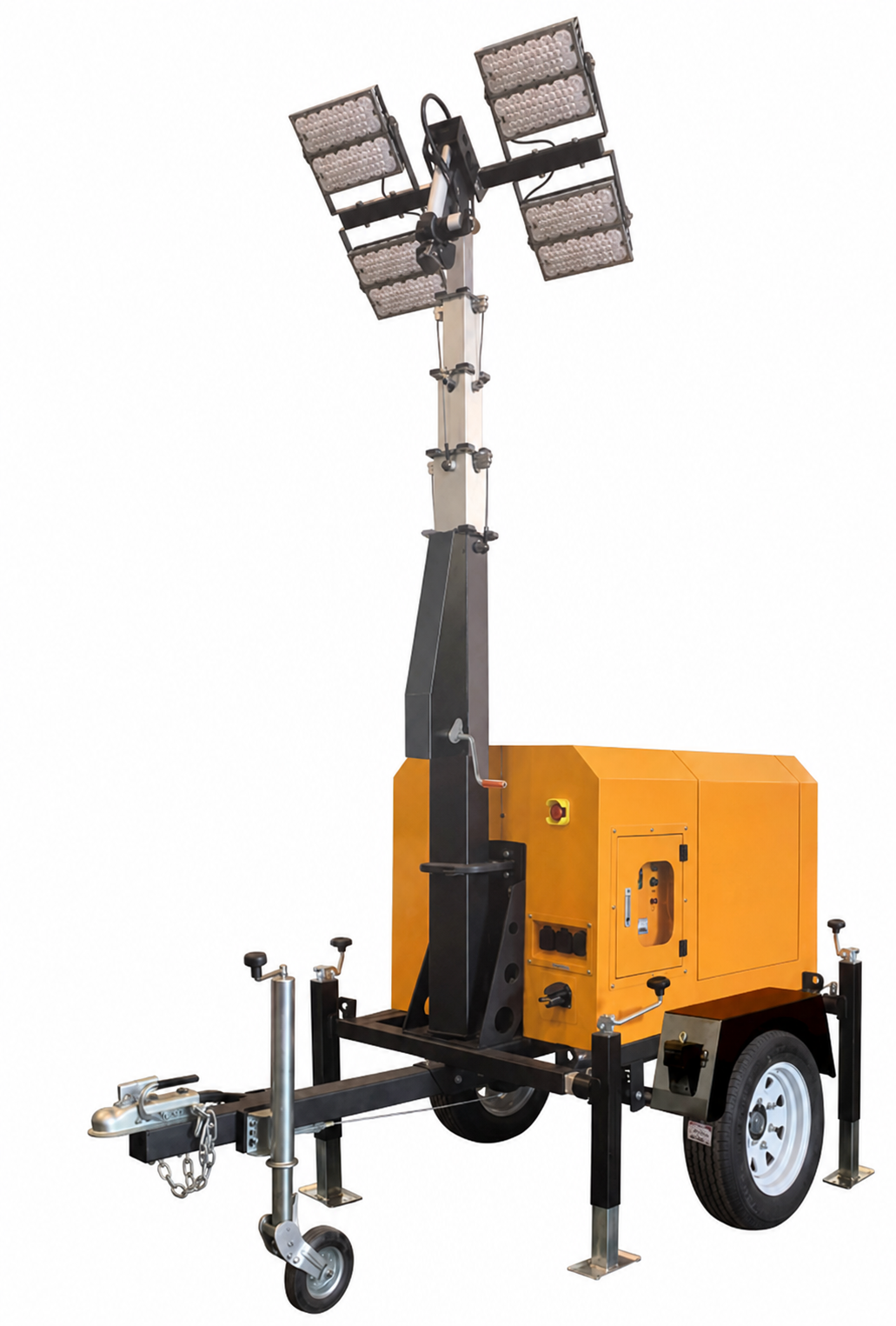
Balance site performance and operating priorities
The S977 combines solar charging, LiFePO4 battery storage and diesel backup. Confirm the backup start method, controller settings and supplied engine-generator package in the quotation. Actual performance depends on lighting load, solar conditions, usable battery energy and the project duty cycle.
Quiet operation windows
Use stored energy during noise-sensitive periods when the selected configuration and battery state permit.
Reduced engine runtime
Battery operation can limit unnecessary engine hours and help simplify routine service planning.
Operational resilience
Engine support provides a practical response when duty cycles exceed the available stored energy.
Energy managed around the real duty cycle
LUMTA evaluates the full application instead of relying on one headline runtime figure. Compare all mobile light towers.
Prioritize solar charging
Use available solar energy to support charging under the site’s seasonal conditions.
Run the LED lighting
Size battery reserve around lighting load and required quiet operating periods.
Start diesel support
Confirm generator backup and control settings for low-energy conditions.
S977 Solar-Diesel Hybrid Mobile Light Tower
The S977 reference configuration lists a 9 m manual mast, four 350 W LED lamps, four 450 W solar panels and 16 kWh nominal LiFePO4 battery storage, with diesel backup. Nominal battery energy is not a runtime guarantee; confirm usable energy and backup control settings for the supplied configuration.
Explore the S977 solar-diesel hybrid mobile light tower for your project.
Where hybrid lighting makes sense
Hybrid platforms are especially useful where noise restrictions, long shifts and changing operating conditions must be considered together.
Urban construction
Support night work near residential and commercial areas.
Events and temporary works
Provide mobile lighting with quieter operating periods.
Road and infrastructure
Adapt to extended shifts and changing site access.
Rental fleets
Offer flexible energy options across varied customer applications.
Configured by a mobile lighting specialist
We review the light coverage target, working hours, noise limits, charging opportunities, ambient conditions, transport requirements and service expectations. This produces a configuration grounded in the way your site actually operates.
The quotation should identify the lighting package, battery basis, backup controls, available documentation and agreed delivery scope.
Four details to start your hybrid light tower quote
Send the information you already know. We can help review whether diesel backup is needed for your lighting schedule.
Quantity
Number of towers; orders start from one unit.
Destination
Country and city or project location.
Application
The area or activity you need to light.
Hours per night
Total lighting hours and any engine-off periods.
Optional details for hybrid energy sizing
Add season of use, shading, fuel access, charging opportunities, auxiliary loads and required delivery date. Specify quiet periods so battery reserve and backup controls can be reviewed together.
Find the configuration for your lighting schedule
No final model choice is needed for the first enquiry.
Compare hybrid with diesel and solar systems
Review operating hours, fuel access, solar availability, noise limits and backup requirements in our solar vs diesel vs hybrid mobile light tower buyer guide.
What determines mobile light tower price?
Compare power systems, mast options, runtime, components, site conditions and delivery scope in our mobile light tower price guide. It includes a quotation checklist for project buyers and rental fleets.
Read the price guide →Need a mobile light tower supplier?
See how LUMTA coordinates application review, configurable diesel, solar and hybrid systems, production follow-up, inspection and export preparation for project buyers.
View project-based supply solutions →