
Hydraulic lifting is becoming the preferred mast system for light towers that are set up and moved often. A hydraulic pump raises the mast of a telescopic light tower in seconds at the press of a control, instead of an operator cranking a manual winch, which matters on rental fleets, road works and busy construction sites.
This guide summarises published market figures for hydraulic lifting mobile light towers, why demand is growing, and what to check before buying.
Looking for a Hydraulic Light Tower?
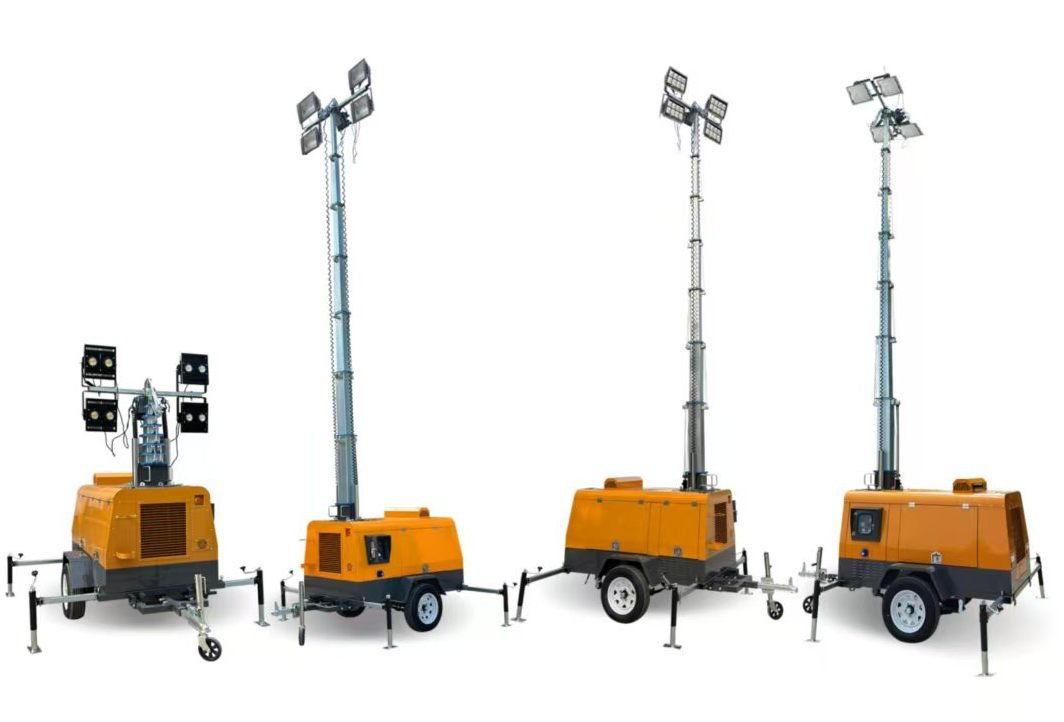
LUMTA LFNVP4000: eight-section 9 m mast raised hydraulically, 4 × 1000 W metal halide (440,000 lm) or 4 × 400 W LED, 90 L tank for up to 65 h, and a choice of Kubota, Yanmar, Changchai or FAW Xichai engines. Factory direct from China, MOQ 1 unit.
Not sure you need hydraulics? Read hydraulic vs electric vs manual masts.
Hydraulic Lifting Light Tower Market Size and Growth
According to Global Market Insights (report GMI7316, published December 2024), the global hydraulic lifting mobile light tower market was valued at USD 2.5 billion in 2024 and is forecast to reach USD 5 billion by 2034, a compound annual growth rate of 7.2% from 2025 to 2034.
| Indicator | Figure | Source |
|---|---|---|
| Market size, 2024 | USD 2.5 billion | GMI7316 |
| Forecast, 2034 | USD 5 billion | GMI7316 |
| CAGR, 2025–2034 | 7.2% | GMI7316 |
| LED segment, 2034 | Over USD 3.5 billion | GMI7316 |
| Solar-powered segment growth | Over 8.5% CAGR to 2034 | GMI7316 |
| U.S. market, 2034 | Over USD 820 million | GMI7316 |
For comparison, the same publisher values the whole mobile light tower market at USD 6.7 billion in 2025, forecast to reach USD 12.1 billion by 2035, with hydraulic lifting at 40.2% of 2025 demand and growing faster (7.1% CAGR) than manual lifting (5.2%) (GMI4621, August 2026). See the mobile light tower market overview and the solar mobile light tower market guide for the other segments.
Figures are third-party estimates quoted from the publisher’s public report summaries and may be revised. They are provided for market context, not as LUMTA sales data.
What Is Driving Demand for Hydraulic Light Towers?
- Labour and setup time. Hydraulic masts go up and down quickly with little effort, so one operator can deploy several towers per shift.
- Rental fleet utilisation. Rental companies move towers between customers and sites constantly; fast, simple setup reduces handling time and operator error.
- Infrastructure and road works. Night work that relocates every shift benefits from fast mast operation.
- Emergency and disaster response. Faster deployment when lighting is needed immediately.
- LED and solar integration. Lighter LED heads and solar or hybrid power systems are being combined with hydraulic masts, the fastest-growing part of the segment.
Need a light tower with a hydraulic mast?
LUMTA builds the LFNVP4000 diesel and the E855 battery light towers with hydraulic masts. Send your quantity and destination for a quote.
Hydraulic vs Manual vs Electric Masts
| Mast type | Strengths | Trade-offs |
|---|---|---|
| Manual winch | Simple, low cost, few parts to maintain | Slower setup, more operator effort |
| Electric | Push-button raising, no hydraulic fluid | Needs power for lifting; motor and controls to maintain |
| Hydraulic | Fast, smooth raising and lowering; low effort | Pump, hoses and seals need inspection; possible leaks |
| Pneumatic | Air-driven mast, suits specific applications | Needs air supply and seal maintenance |
For a detailed comparison, read manual vs electric vs hydraulic light tower masts and the telescopic light tower height, wind and stability guide.
What to Check Before Buying a Hydraulic Light Tower
- Mast height and rotation, and the rated wind speed at full height
- Hydraulic pump type, controls and the manual lowering procedure if power is lost
- Hose, fitting and seal specifications and the inspection schedule
- Stabiliser and outrigger arrangement
- Lamp configuration, engine or battery system and fuel or charging data
- Transport dimensions, weight and towing requirements for your market
LUMTA’s LFNVP4000 hydraulic diesel light tower has a 9 m, 8-section fully hydraulic mast, four 1,000 W metal halide lamps (440,000 lm) or four 400 W LED and a 90 L tank for about 65 hours; the engine can be Kubota, Yanmar, Changchai or FAW Xichai. Compare the full range on the diesel light towers page.
Frequently Asked Questions
How big is the hydraulic lifting mobile light tower market?
Global Market Insights values the hydraulic lifting mobile light tower market at USD 2.5 billion in 2024 and forecasts USD 5 billion by 2034, a 7.2% CAGR from 2025 to 2034.
Which hydraulic light tower segment is growing fastest?
Solar-powered hydraulic light towers, forecast to grow at over 8.5% a year to 2034. LED units are the largest lighting segment and are expected to pass USD 3.5 billion by 2034.
Why are hydraulic masts replacing manual winch masts?
Hydraulic masts raise and lower the lamps faster and with less operator effort, which saves labour when towers are deployed or moved every shift, as in rental fleets and road works. Manual winches remain simpler and cheaper to maintain.
What maintenance does a hydraulic light tower mast need?
Regular checks of hydraulic oil level and condition, hoses, fittings and seals for leaks, and the mast sections and locking devices. Follow the inspection schedule supplied for the quoted configuration.
Does LUMTA make a hydraulic light tower?
Yes. The LUMTA LFNVP4000 diesel light tower uses a hydraulic, eight-section 9 m mast with 4 × 1000 W metal halide (440,000 lm) or 4 × 400 W LED and up to 65 h on a 90 L tank.