
Buying a mobile light tower involves more than comparing lamp output and price. Before a unit leaves the factory—or before a buyer accepts delivery—the complete machine should be checked as one working system. The trailer, stabilizers, mast, lights, controls, power source and transport components all affect safety, reliability and operating cost.
This mobile light tower inspection checklist gives procurement teams, distributors and rental companies a practical framework for reviewing a unit before shipment. Exact inspection items should be adjusted to the selected model, contract, destination regulations and approved technical specification.
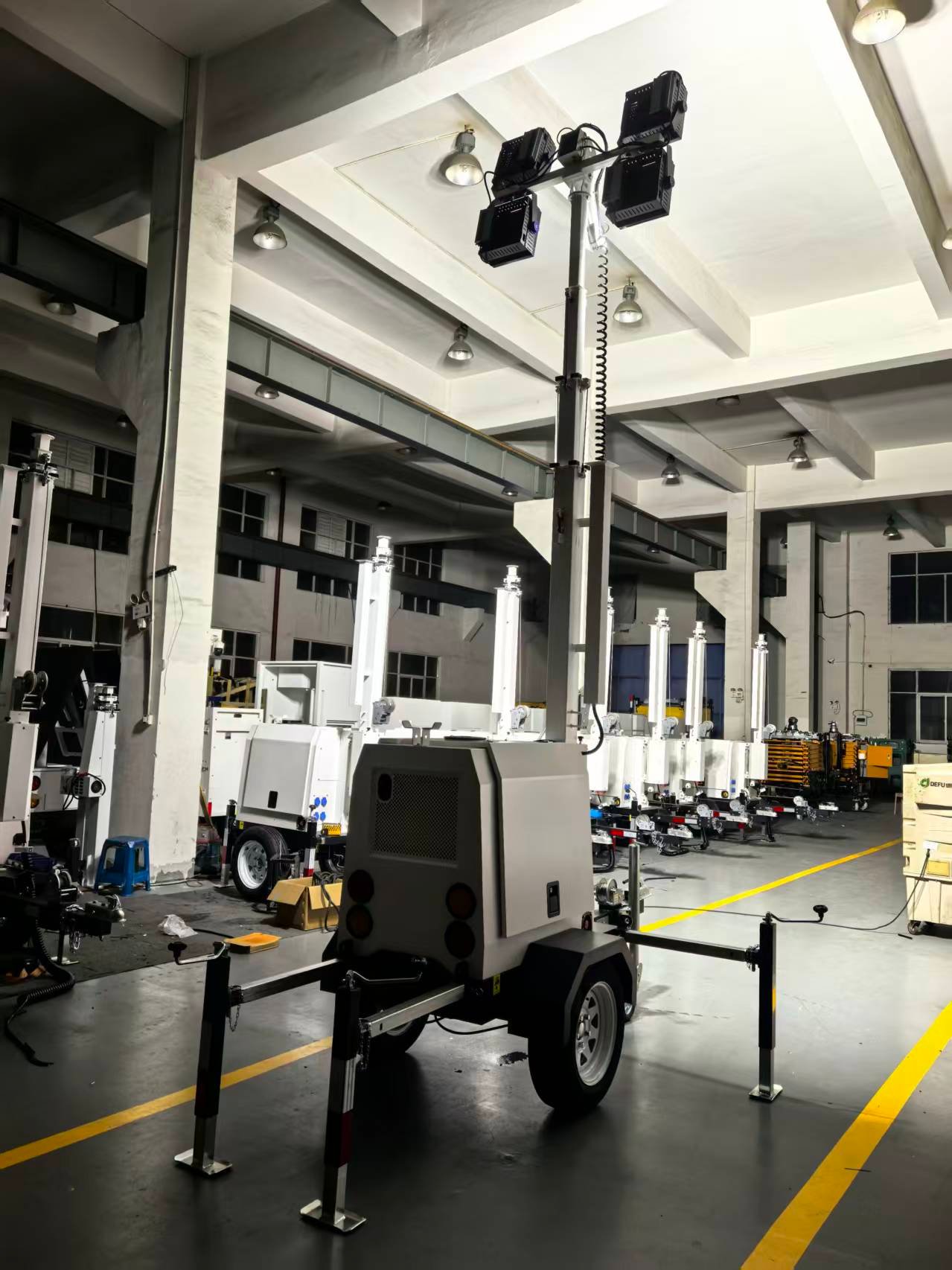
1. Confirm the Ordered Configuration
Start with the purchase order, approved quotation and technical data sheet. Confirm that the model, power system, lamp arrangement, mast type, voltage, frequency, socket configuration and optional equipment match the order.
Do not rely only on appearance. Two units can look similar while using different engines, generators, batteries, controls or lighting components. Record model and serial information where applicable and check that labels are clear and securely attached.
2. Inspect the Trailer and Towing Components
Walk around the chassis and check the frame, drawbar, coupling, safety chains, jockey wheel, tyres, wheel fasteners, mudguards and road lights. Look for visible deformation, sharp edges, loose hardware, coating damage or signs of impact.
Confirm that access doors and covers open smoothly and close securely. If the tower will travel on public roads, verify the applicable towing and registration requirements for the destination market before shipment.
3. Check Stabilizers and Ground Support
Extend each stabilizer through its normal range and inspect the leg, adjustment mechanism, retaining points and footpad. The stabilizers should move consistently and hold their selected positions.
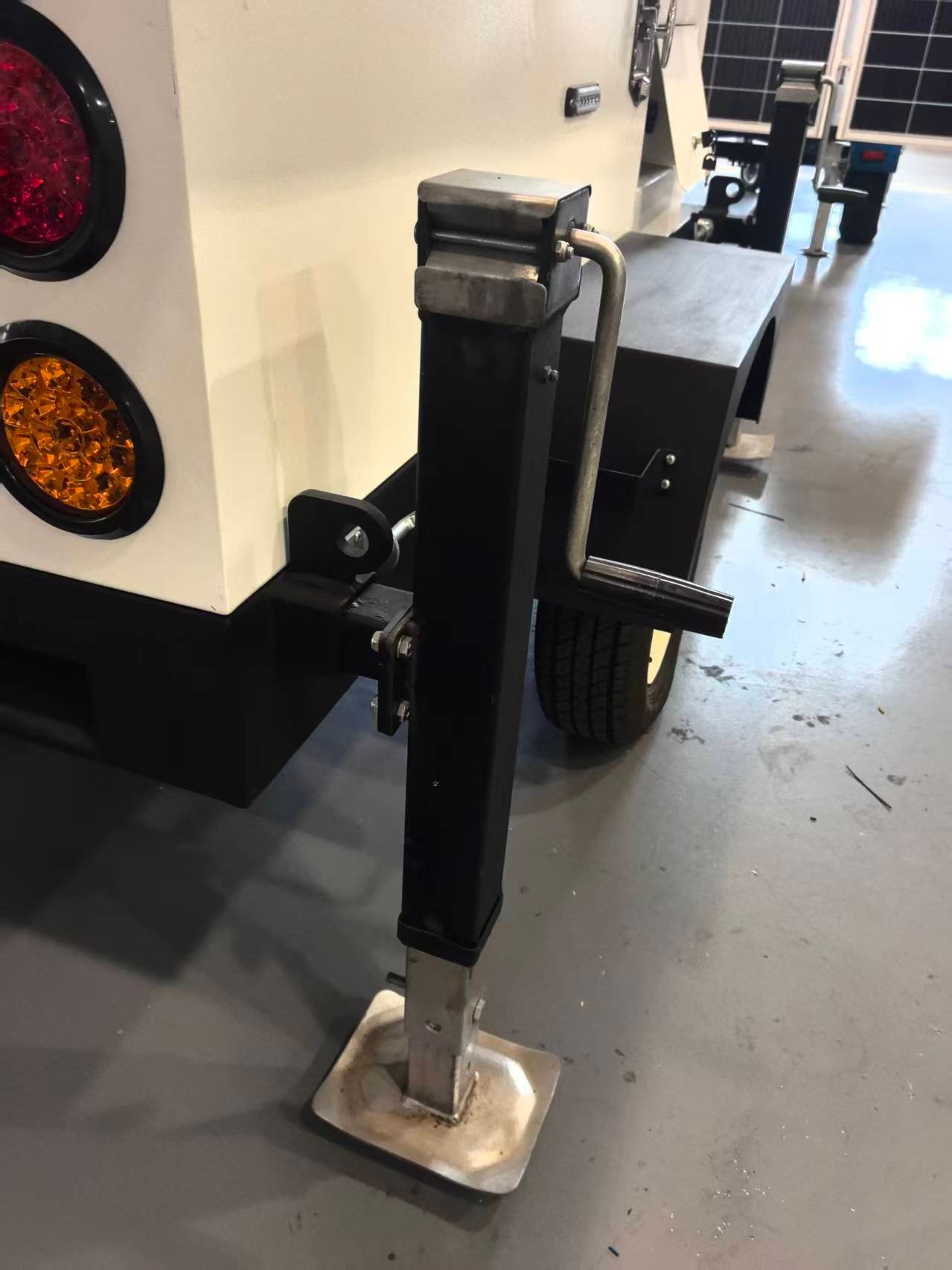
Place the machine on a suitable level surface and verify that it can be stabilized without unusual chassis movement. Do not raise the mast until the trailer is correctly supported.
4. Examine the Mast and Raising System
Inspect mast sections, welds, fasteners, cable routes, pulleys, hinges and locking points. Look for damage, obstruction, loose parts or cables that could be pinched during movement.
Operate the mast through a controlled raising and lowering cycle using the supplied mechanism. Depending on the model, this may be manual, electric, hydraulic or pneumatic. Stop immediately if a section binds, a cable catches or the trailer shifts. Confirm that the mast can be secured in both operating and transport positions.
5. Inspect the Light Fixtures and Cables
Check that each lamp is securely mounted and can be aimed through its intended adjustment range. Inspect housings, lenses, brackets, fasteners and visible cables for damage or looseness.
Raise the mast only in a suitable test area, then switch on the lights individually. Confirm that all installed lamps operate and that the control labels correspond to the correct circuits. Observe long enough to identify obvious flickering or intermittent operation.
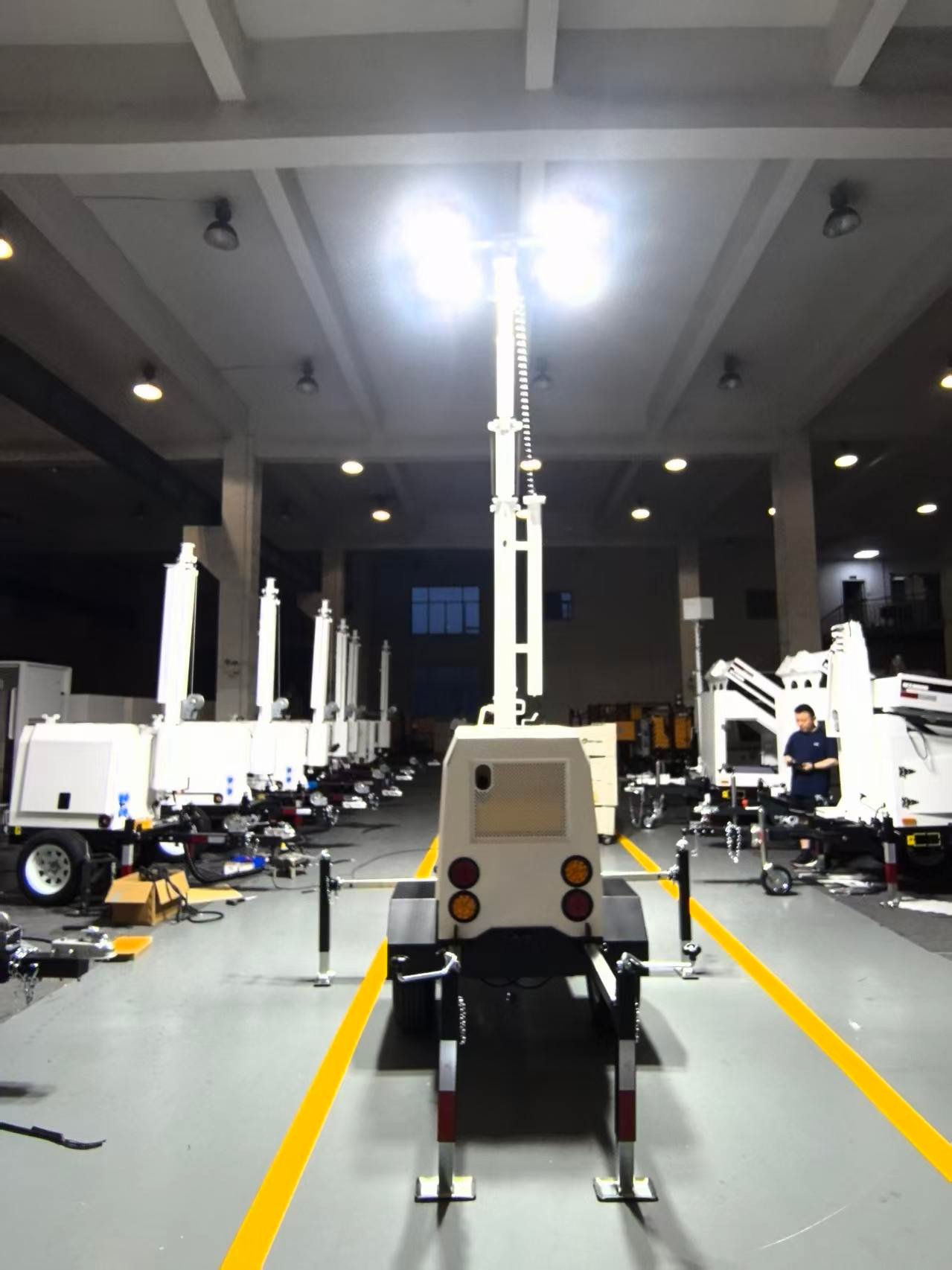
6. Review the Control Panel
The control panel should be clearly labelled and protected from unintended operation. Check switches, indicator lights, meters, circuit breakers, emergency controls and sockets included in the ordered configuration.
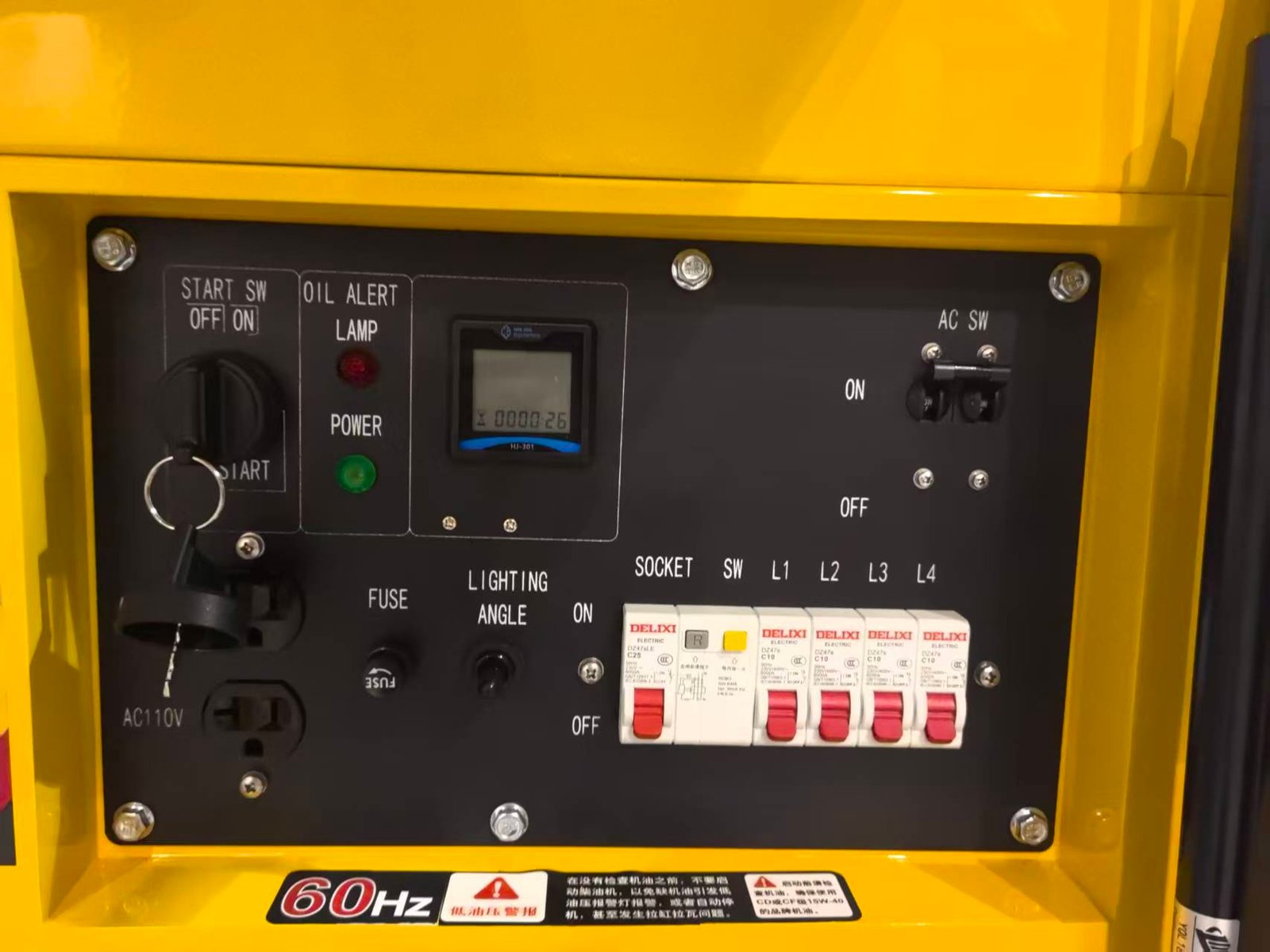
Buyers should verify voltage and frequency against the destination requirement. Socket type, outlet protection and circuit ratings must match the approved specification. Electrical testing should be performed only by qualified personnel using suitable equipment.
7. Check the Power System
For a diesel-powered tower, inspect the engine and generator area for loose connections, damaged hoses, fluid leakage or unsecured components. For solar or battery-powered models, inspect panels, battery enclosures, charging equipment and cable connections.
A functional run should follow the manufacturer’s procedure. Record starting behaviour, panel indications and any abnormal sound, vibration, odour or heat. Do not claim a load test, runtime test or fuel-consumption result unless it was performed using an agreed method and documented conditions.
8. Verify Safety Labels and Documents
Check that required warning labels remain visible near moving parts, electrical equipment, hot surfaces and lifting or stabilizing points. The shipment should include the agreed operating manual, maintenance guidance, parts information and electrical or hydraulic documentation.
9. Inspect the Transport Configuration
Lower the mast completely and secure lamps, panels, cables and accessories for transport. Retract stabilizers and verify that no component projects unexpectedly beyond the transport envelope. Photograph the machine before loading to document its pre-shipment condition.
10. Record and Close Inspection Findings
Use a written checklist with clear results such as accepted, correction required or not applicable. Each finding should identify the location, problem, responsible party and planned completion date. Corrections should be verified before the unit is released for shipment.
Questions Buyers Should Ask
- Does the unit match the signed technical specification?
- Which functional checks were performed and recorded?
- Are voltage, frequency, sockets and labels correct for the destination?
- Which items require assembly or adjustment after delivery?
- What maintenance parts and service documents are included?
Make Inspection Part of the Purchase Process
Pre-delivery inspection works best when requirements are agreed before production is completed. Define required documents, photos, functional checks and acceptance criteria in the purchase order or inspection plan.
Explore LUMTA’s mobile light tower range and read the guide to manual vs. hydraulic light towers. For specifications, configuration options and quotations, contact LUMTA through the inquiry page.
Turn the inspection checklist into a quotation requirement
Review the project supplier process, compare documents in the buyer resource centre and send the required inspection scope through the project enquiry form.