Solar Mobile Lighting Towers for Sale
Compare S971 and S975 towable solar mobile lighting towers for off-grid worksites, rental fleets and temporary facilities. For camera-led security and remote monitoring, explore the S973 solar mobile surveillance trailer as a separate task-specific platform. Orders start from one unit. Start with quantity, destination, application and hours per night. We can help compare the mast and battery options before confirming the project configuration and price.
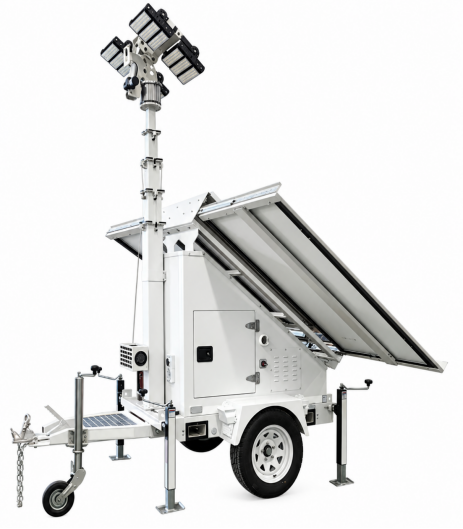
Solar Lighting Towers for Sale for Australian Projects
Comparing mobile solar lighting towers for an Australian mine site, civil works site or rental fleet? Start with the lighting area, operating season and nightly schedule. LUMTA offers complete solar lighting units with LED lights, solar panels, battery storage and a mobile mast platform for project configuration review.
Compare complete solar lighting tower configurations
Review the S971 solar light tower with a 7 m manual mast, four 100 W LED lamps and a 1,200 W solar array, alongside the S975 solar lighting tower with a 7.5 m electric mast, four 100 W LED lamps and a 1,200 W solar array. Use the comparison below to review their battery configurations before requesting a quotation.
Size the system for the location and season
- Site and operating months: provide the Australian state, postcode or coordinates, shading conditions and months of use so the proposal can account for seasonal charging conditions.
- Nightly demand: specify hours of lighting, full-power and dimming periods, target illuminance and any camera or communications loads.
- Battery reserve: state how many low-sun days the project needs to accommodate. Ask the proposal to identify usable battery energy, operating assumptions and the recovery charging plan.
- Deployment and supply: include mast height, panel deployment space, transport arrangements, quantity, delivery location and project documentation requirements.
Panel wattage and nominal battery capacity alone do not establish all-night performance. Compare configurations against the same lighting schedule and charging assumptions. If your specification calls for diesel backup, review the S977 hybrid alternative separately.
S971 solar mobile light tower
A configurable off-grid platform that brings together solar generation, energy storage, LED lighting, mast deployment and optional monitoring equipment.
Built around the nightly energy task
Lighting hours, brightness, seasonal sunlight and auxiliary loads are evaluated together before the panel and battery arrangement is confirmed.
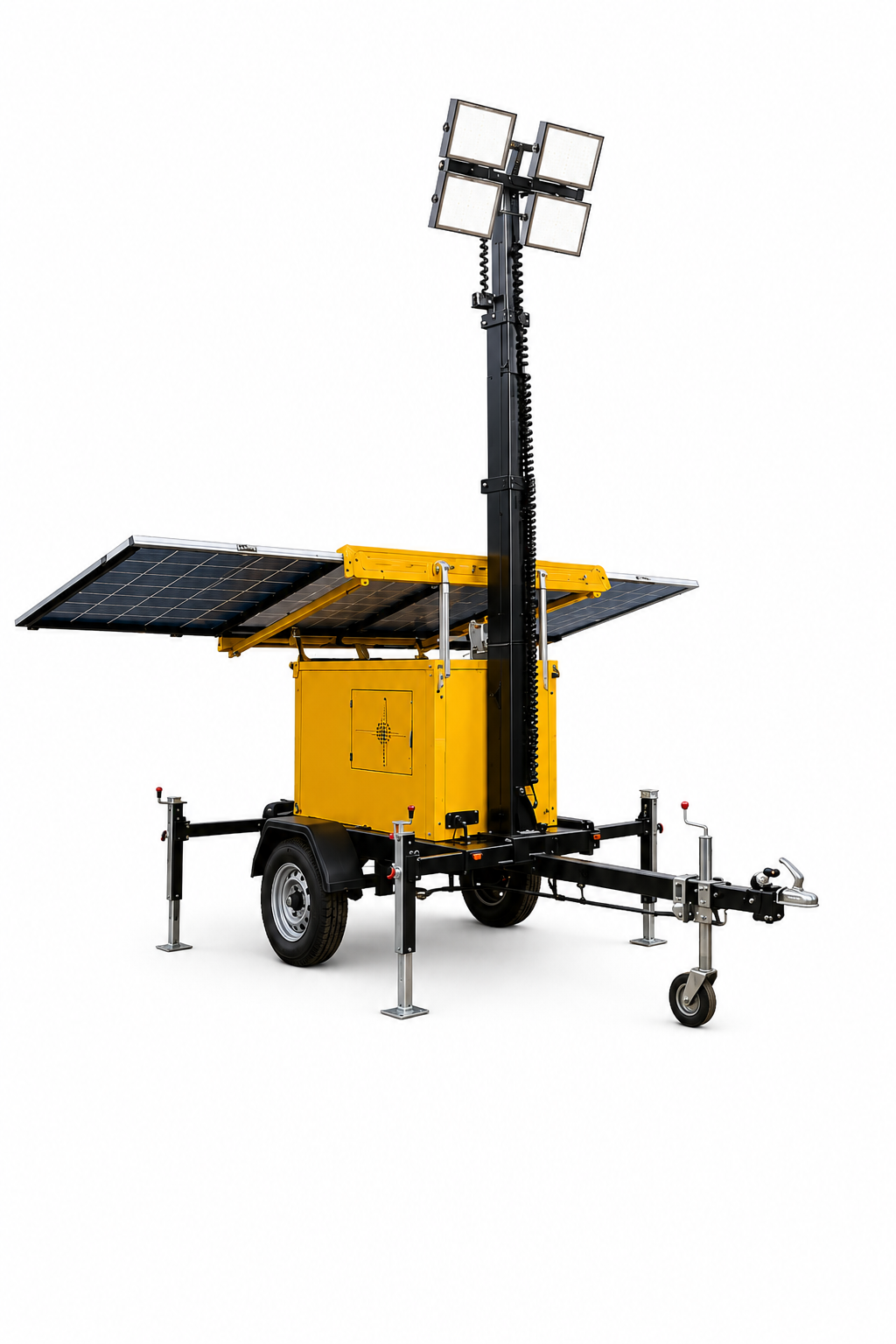
S975 off-grid lighting platform
Four 100 W LED modules, a 7.5 m electric mast, three 400 W solar panels and a 25.6 V 200 Ah LiFePO4 battery pack in a towable single-axle package.
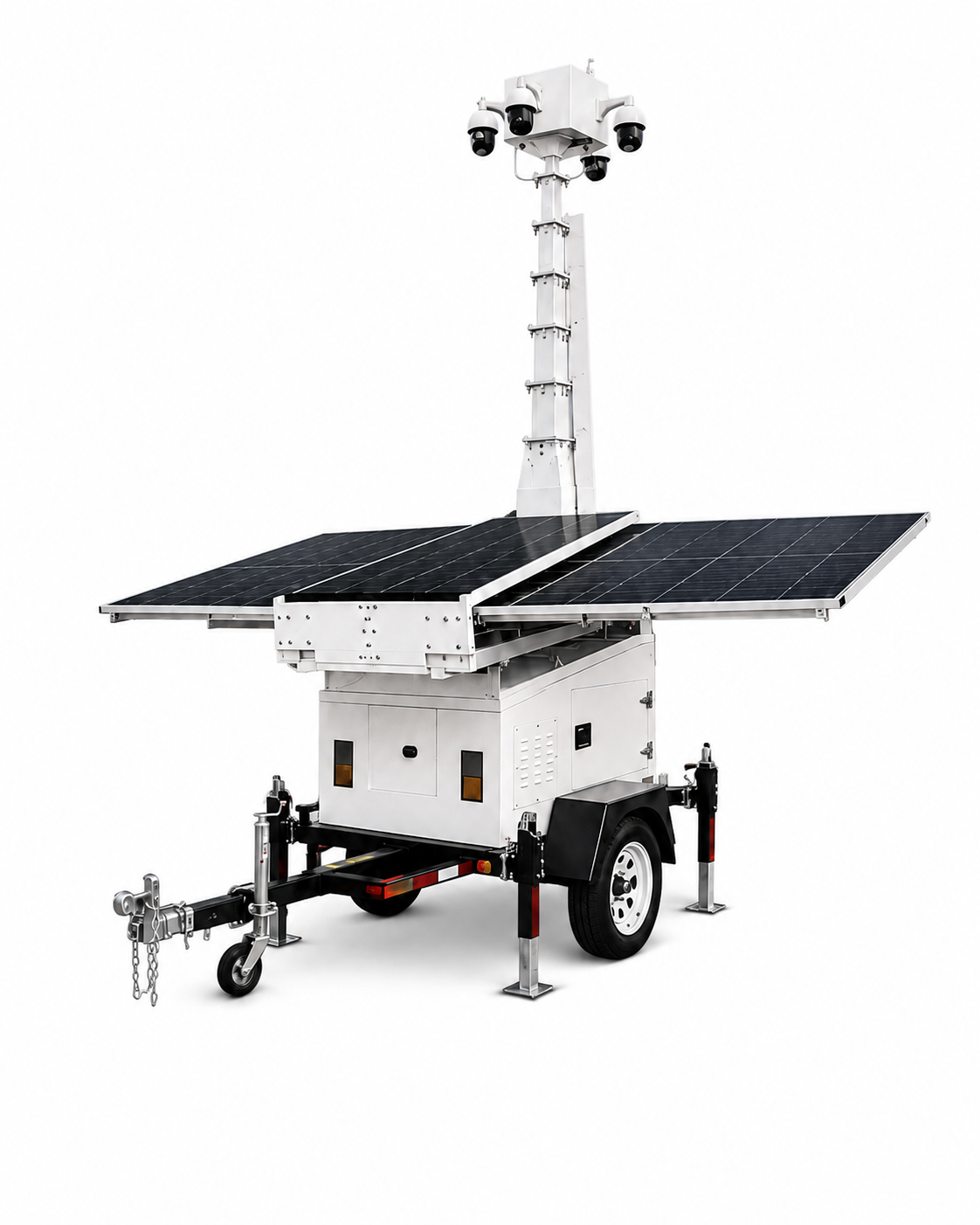
Off-grid 4G monitoring platform
A configurable towable surveillance system with solar generation, battery storage and 4–9 m mast options, with project-selected dome or bullet camera options for remote and temporary sites.
Compare Solar and Hybrid Light Tower Configurations
Choose the model by its primary task, required nightly energy, auxiliary equipment and deployment conditions. Final solar array, battery reserve, mast and controls can be reviewed around the actual project.
| Model | Primary function | Key configuration | Typical project fit | Details |
|---|---|---|---|---|
| S971 | Off-grid mobile lighting | 4 × 100 W LED (400 W); 3 × 400 W solar (1,200 W); 4 × 200 Ah gel batteries; DC 24 V rated system; 7 m (23 ft) manual mast | Remote sites, access roads and low-noise lighting | View S971 → |
| S975 | Electric-mast solar lighting | 4 × 100 W LED (400 W); 3 × 400 W solar (1,200 W); one 25.6 V 200 Ah LiFePO4 pack (5.12 kWh nominal); 7.5 m (24.6 ft) electric mast | Work zones, temporary facilities and relocatable lighting | View S975 → |
| S977 | Solar-diesel hybrid lighting | 4 × 350 W LED (1,400 W); 4 × 450 W solar (1,800 W); 16 kWh nominal LiFePO4 storage; 9 m (29.5 ft) manual mast | Projects requiring diesel backup during low-sunlight periods | View S977 → Ask About S977 on WhatsApp |
Panel wattage is rated capacity, not continuous charging output. Nominal battery energy is not usable energy or a runtime guarantee. Confirm the lighting schedule, usable battery capacity, temperature and charging conditions. S971 individual battery voltage and wiring require confirmation.
S973 solar surveillance trailer is a separate monitoring platform with project-defined camera, communication and auxiliary loads.
Choosing a Towable Solar Light Tower for a U.S. Site
For construction work zones, temporary facilities and rental-fleet purchases, compare S971 and S975 against the same night-lighting schedule. S971 has a 23 ft (7 m) manual mast and a 1,200 W solar array; S975 has a 24.6 ft (7.5 m) electric mast and a 1,200 W array. Both list four 100 W LED lights. Heights in feet are approximate.
- Winter use or shaded sites? Provide the state, ZIP code, operating months and panel shading. State the nightly hours and reserve needed during low-sun periods.
- Comparing battery specifications? S975 has one 25.6 V 200 Ah LiFePO4 pack with 5.12 kWh nominal energy and approximately 4.5 kWh as a conservative planning allowance before system losses. Request usable energy and operating assumptions; for S971, confirm individual battery voltage and wiring before comparing storage totals.
- Need charging or control options? Include any requirement for AC backup charging, a lighting timer, dimming or additional camera loads so the proposal can identify the options available for the supplied configuration.
Send quantity, work-area dimensions and delivery date with your requirements. If engine backup is part of the specification, compare the S977 solar-diesel hybrid separately.
Portable Solar Light Tower Sizing for Your Site
See a solar light tower configuration supplied for a mountain project in Nepal, with four 100 W LED floodlights, a 7.5 m manual mast and a 1,200 W solar array. Review the project configuration alongside your own site conditions.
A solar light trailer brings the lighting, solar panels and battery system to a temporary work area. Start with the lighting task and nightly schedule, then review charging conditions and the space available to deploy the panels. For towing and transport checks, use our portable and towable light tower buying guide.
Nightly energy demand
Lighting output, operating hours, controls, cameras and communications determine the stored energy required.
Location & season
Latitude, season, shading and consecutive low-sun days affect charging and reserve requirements.
Battery conditions
Ambient temperature and battery chemistry influence usable capacity, protection and service life.
Panel access
Transport width, panel deployment, orientation, wind, cleaning and service access must be reviewed.
Solar autonomy depends on stated assumptions
Any runtime or autonomy figure should be tied to a confirmed configuration, operating schedule, battery reserve and site solar conditions.
| Lighting requirement | Illuminated area, target brightness, lamp output and nightly operating hours |
|---|---|
| Solar conditions | Destination, season, shading, orientation and consecutive low-sun assumptions |
| Energy storage | Battery type, usable reserve, protection and temperature conditions |
| Auxiliary loads | Cameras, routers, recorders, sensors, controls and communications |
| Deployment | Transport, panel opening, mast use, wind, dust, cleaning and service access |
Where Solar Mobile Lighting Towers Fit
Security & Monitoring
Lighting with project-defined camera and communications options.
Remote Access Roads
Temporary lighting where regular fuel delivery is difficult.
Low-Noise Sites
Overnight locations where reducing engine operation is valuable.
Temporary Facilities
Off-grid support areas, compounds and unattended locations.
Configure the platform for the lighting and monitoring task
Four details to start your solar light tower quote
Not sure whether to choose S971 or S975? Send the basic project details first. Solar and battery sizing can then be reviewed for your location.
Number of towers. Orders start from one unit.
Country and city or project location.
Describe the area or activity you need to light.
Expected nightly lighting hours and months of use.
Optional details for solar and battery sizing
Add shading, required low-sun reserve, work-area dimensions, target brightness, temperature, camera or communication loads and delivery date if known. Runtime depends on usable battery energy, lighting load and local charging conditions; it is confirmed with the proposed configuration.
Solar Mobile Light Tower FAQs
How do I choose between S971, S975 and S977?
S971 and S975 each have four 100 W LED modules and three 400 W solar panels. S971 uses a 7 m manual mast and four 200 Ah gel batteries; S975 uses a 7.5 m electric mast and one 5.12 kWh nominal LiFePO4 pack. S977 is a solar-diesel hybrid with four 350 W LED modules and backup generation. Compare required hours per night, usable battery energy, sunlight and site conditions before confirming runtime. S973 is a separate surveillance platform with project-defined camera and communication loads.
Can a solar mobile light tower operate throughout the night?
It can when the lighting load, battery reserve, solar array and local charging conditions are sized for the required schedule. Runtime should be confirmed against the destination, season, shading, temperature and consecutive low-sun assumptions.
Can cameras and 4G remote monitoring be included?
Yes. The S973 platform can be configured with camera mounting, 4G communications, storage and control equipment. The continuous auxiliary load must be included when the solar and battery system is calculated.
Which solar light towers are suitable for unattended remote sites?
Consider S971 or S975 for solar lighting, and S977 when the project also needs diesel backup. Suitability depends on the nightly lighting load, seasonal sunlight, usable battery reserve and the planned interval between site visits. Include camera and communication loads in the energy review. A non-standard 4G/App module can be quoted for remote lighting control and operating-status checks; confirm local network coverage, available status information and recurring charges. Unattended operation still requires a maintenance and on-site response plan. Ask for the proposed low-sun operating strategy and controller settings in the quotation; remote monitoring alone does not guarantee continuous lighting.
What information is needed for a quotation?
Start with quantity, destination, application and hours per night. You do not need a final model selection. Add season of use, shading, reserve requirements, camera loads and delivery date if known. We can review the solar and battery configuration against the site conditions before confirming runtime and pricing.
Start with the site energy conditions
Send quantity, destination, application and hours per night. A final model choice or complete technical specification is not needed for the first enquiry.
Compare solar with diesel and hybrid systems
Compare all mobile light towers.
Use our solar vs diesel vs hybrid mobile light tower buyer guide to compare energy availability, runtime, noise, service planning and backup needs before choosing a configuration.
What determines mobile light tower price?
Compare power systems, mast options, runtime, components, site conditions and delivery scope in our mobile light tower price guide. It includes a quotation checklist for project buyers and rental fleets.
Read the price guide →Need a mobile light tower supplier?
See how LUMTA coordinates application review, configurable diesel, solar and hybrid systems, production follow-up, inspection and export preparation for project buyers.
View project-based supply solutions →