
Portable Mobile Light Towers for Sale
If you are comparing a portable light tower for sale, begin with how it will move and where it will work. A portable LED light tower also needs a lamp, mast and power package matched to the task. Describe the lighting duty alongside transport, towing and setup requirements so the complete equipment package can be reviewed for your project.
Portable mobile light towers: which one fits your site?
A portable mobile light tower is a self-contained lighting unit with LED floodlights on a telescopic mast and its own power (diesel, solar or battery) that you can move between work areas by hand, forklift or tow vehicle.
- WK1600M5: hand-push, 4.8 m mast, fits through site gates and into buildings
- 4LT1600M7BATFC: compact 7 m diesel tower, up to 26 per 40 HC container
- 4LT1600M9Z482: towable 9 m electric mast, up to 68 h per tank
- 4LT600M9AH1200: solar, zero fuel, up to 20 h of light
New to portable lighting? Our portable light tower buying guide explains how to choose the class, power source, mast and light output before you request a quote.
Request Portable Light Tower Specifications & Pricing
Not sure which configuration fits? Send quantity, destination, nightly lighting hours and transport requirements; identify unknown items for review.
Compare mobile and towable lighting equipment using the purchase checklist below. Send quantity, destination, nightly operating hours and movement frequency. Include your preferred power source or describe the fuel and charging arrangements available at the site.
Model starting points
Choose a configuration to quote
These models provide a starting point for a portable lighting enquiry. Confirm the exact transport arrangement, destination requirements and included equipment for the unit quoted.
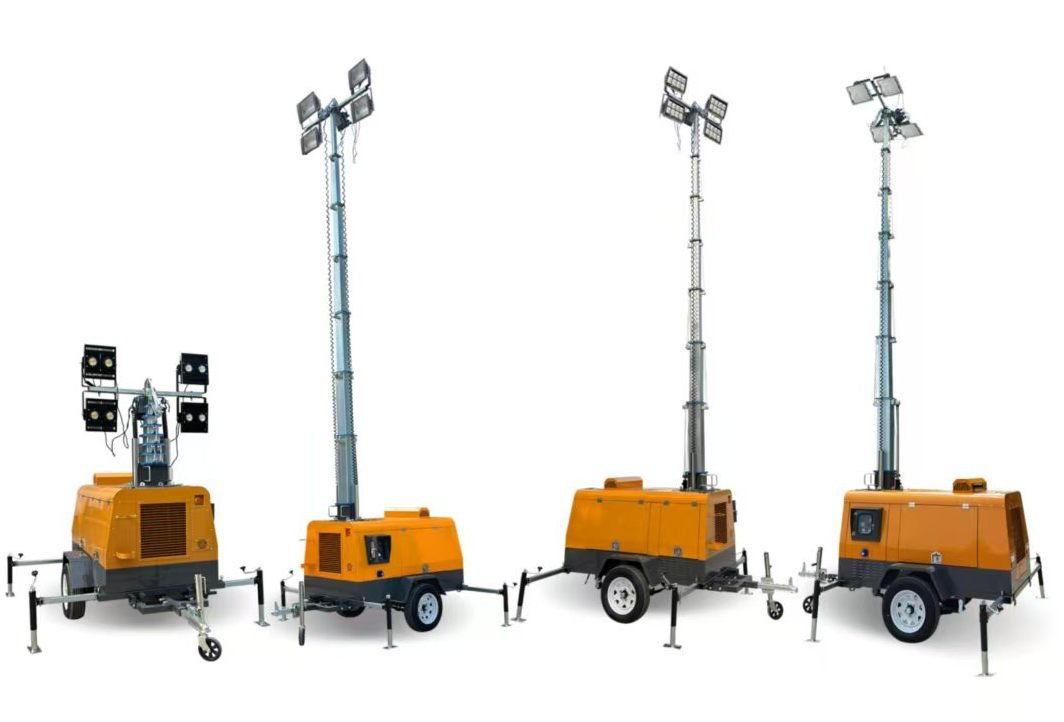
LFNVP4000 hydraulic light tower
A 9 m fully hydraulic mast with four 1,000 W metal halide lights (440,000 lm) or four 400 W LED and a 90 L tank for up to 65 h. Choose a Kubota, Yanmar, Changchai or FAW Xichai engine.

4LT600M9AH1200 solar light tower
Four 150 W LED lights, three 470 W solar panels and six 200 Ah gel or LiFePO4 batteries on a 9 m mast. No fuel, no engine noise, up to 20 h of light.
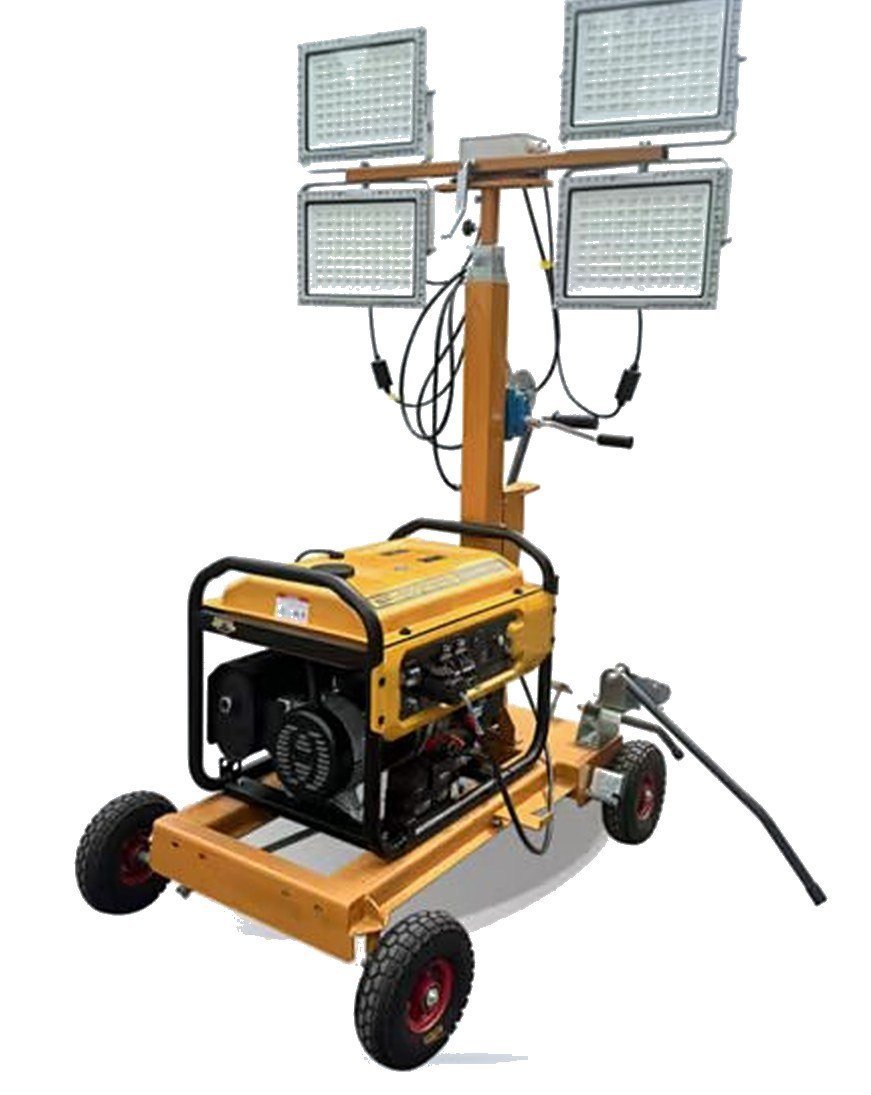
WK1600M5 walk-behind light tower
A hand-push tower with 4 × 400 W LED lights, a 4.8 m hand-crank mast and a 2.8 kVA generator set with a 25 L tank. Use it where a trailer cannot go: inside buildings, tunnels and tight yards.
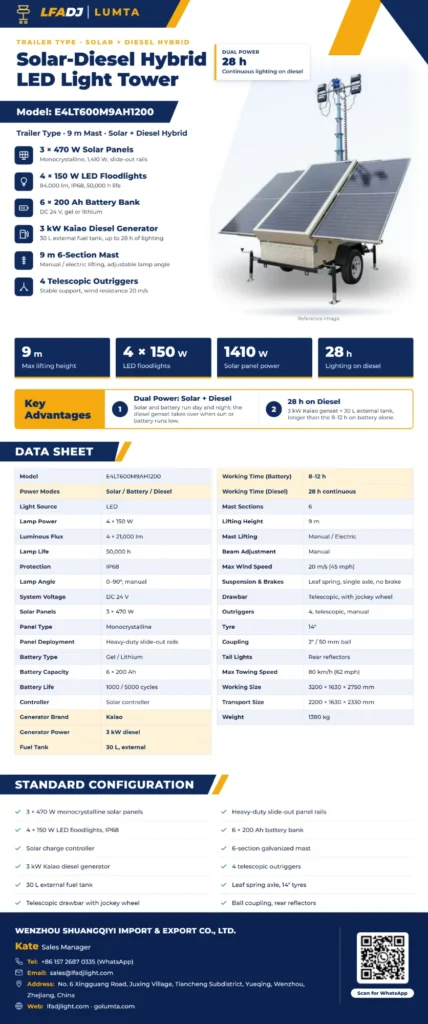
E4LT600M9AH1200 hybrid light tower
The solar platform plus a 3 kW diesel generator that starts when the battery runs low: up to 28 h on diesel for winter and cloudy periods.
Define how the tower will move
For portable light towers, mobility is a purchase requirement to describe in detail. Tell the supplier how equipment will travel between its storage point, transport vehicle and working position.
| Movement pattern | Inputs for configuration review |
|---|---|
| Repositioning within a site | Ground conditions, route width, gradients, access restrictions, movement frequency and available handling equipment |
| Moving between projects | Transport distance, vehicle, hitch, loading method, route constraints and intended towing use |
| Deployment across fleet branches | Branch locations, expected transfers, storage space, operator resources and service arrangements |
Browse the complete mobile light tower range for equipment routes. If the purchase is for a rental business, use the rental-fleet guide for handover and service-scope questions. State your movement requirements even when the model is still undecided.
If the work zone is small or the light has to be carried by hand, a tripod work light may suit better than a towed tower. Compare the two in portable work light vs mobile light tower.
Portable light towers from our factory
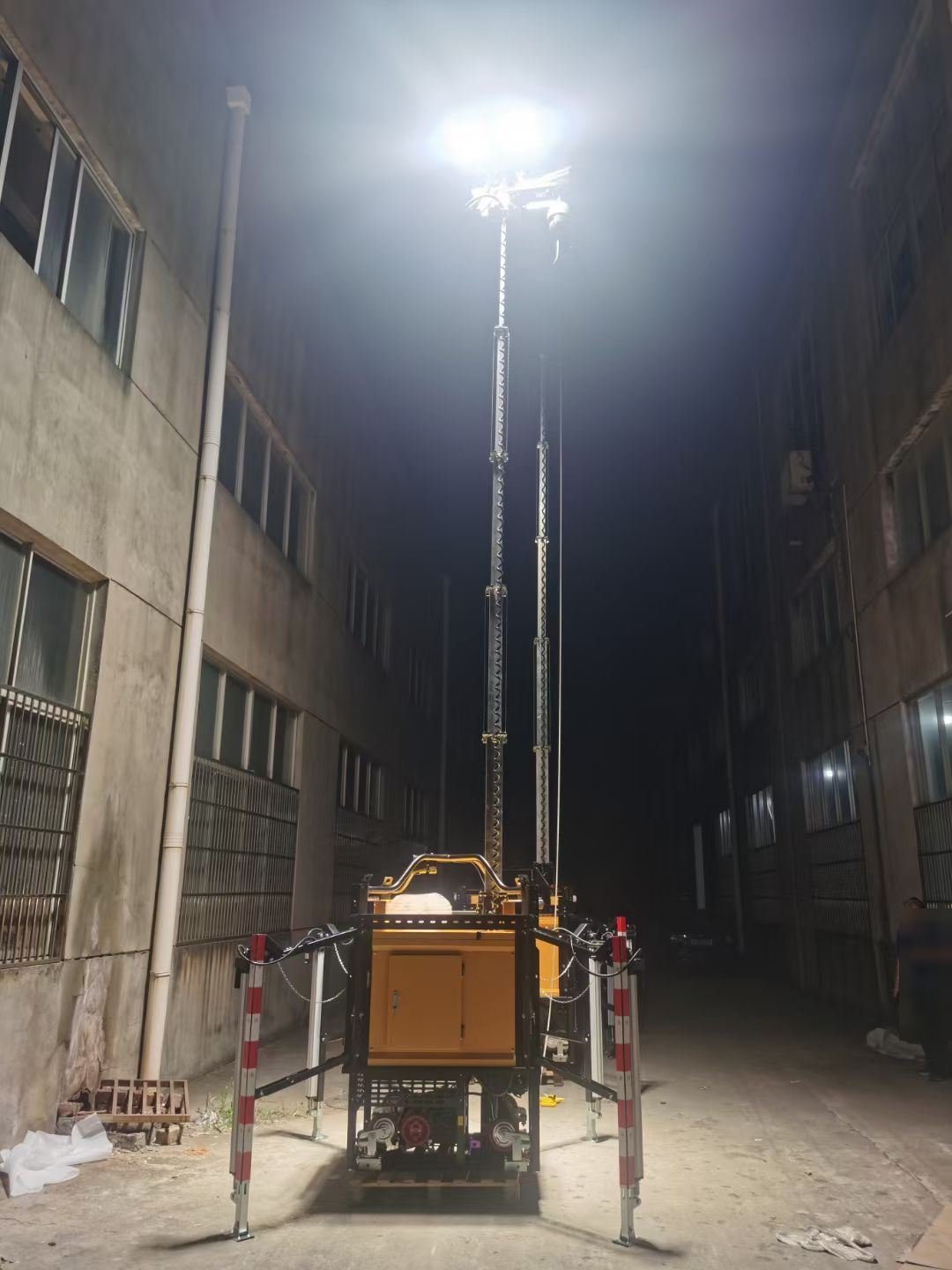
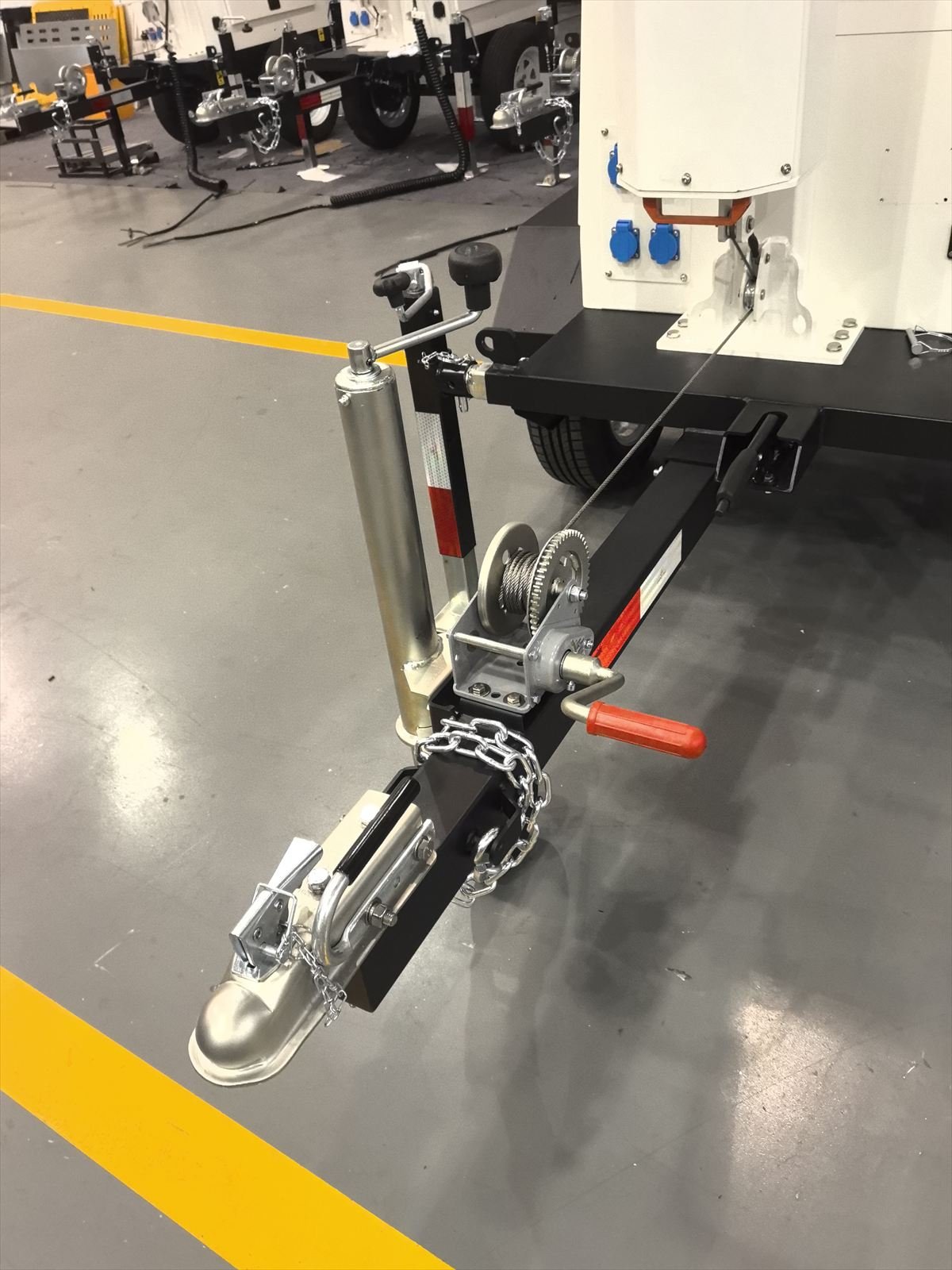
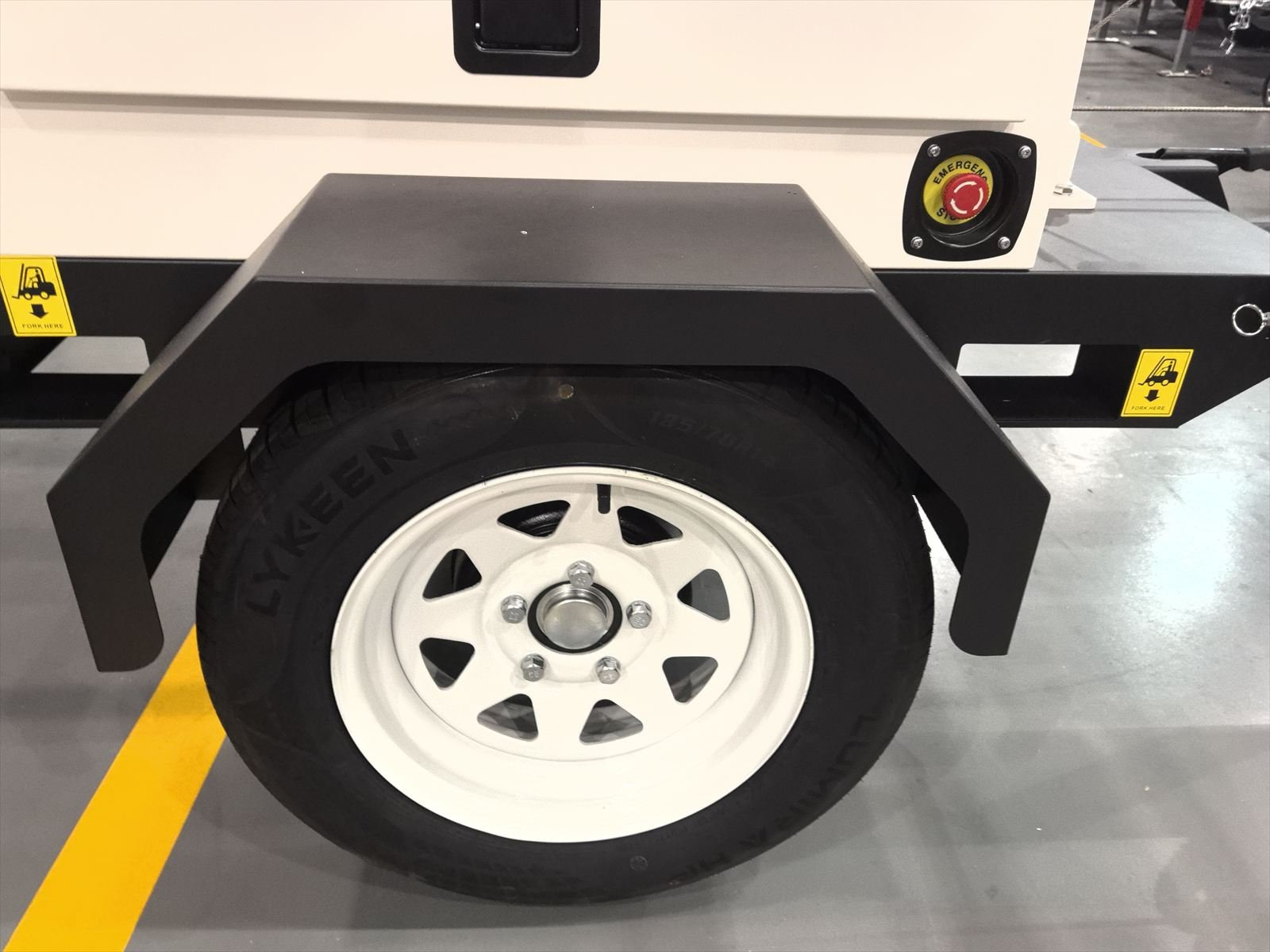
Compact and trailer-mounted LUMTA light towers in our workshop: transport position, towing hardware and a night test of the LF2970.



Compare dimensions and weight on the same basis
Request dimensions and weight for the version being quoted. Keep the equipment’s transport arrangement, working arrangement and shipping package separately identified so each can be checked against your constraints.
| Information to request | What to compare it with |
|---|---|
| Stowed equipment dimensions | Gates, storage space, vehicle space and the intended movement route |
| Working footprint and mast arrangement | The proposed operating position, stabilizer space and overhead constraints |
| Packed dimensions | Container or vehicle space, packing method and unloading arrangements |
| Weight and its stated basis | The vehicle and handling-equipment limits relevant to your plan |
| Equipment included in that weight | Fuel, batteries, lamps, accessories and packing included or excluded from the stated figure |
Ask whether a quoted weight is dry, ready for transport or packed for shipping, and request the equipment state used for that figure. Confirm how detachable items and accessories will travel. Compare offers using matching assumptions rather than treating unlike weight or dimension descriptions as equivalent.
Confirm towing and destination requirements
State whether movement will take place within private sites, on public roads, or by transport vehicle. Provide the destination and the proposed towing vehicle and hitch details. Ask the supplier to identify the trailer arrangement and the documents available for the selected configuration.
Request details of the coupling, axles, tyres, brakes and signalling equipment relevant to your transport plan. Identify who will check the vehicle combination and destination requirements before ordering. Request the unit’s transport instructions and applicable limits rather than assuming that a towable design establishes public-road acceptance.
Include route conditions and loading or unloading restrictions in the enquiry. The quotation should state which transport equipment and accessories are supplied, and which arrangements you or another party must provide.
For a step-by-step guide on how to ship a light tower by towing or on a truck, read our mobile light tower transport checklist.
Match mast operation to deployment frequency
A manual winch has the fewest parts to service: see the 4LT1600M9CC6.5KW with a 9 m winch mast. For frequent moves, the 4LT1600M9Z482 raises its 9 m mast electrically. For a compact 550 kg unit, the 4LT1600M7BATFC raises four 400 W LED lamps to 7 m.
Describe how often crews expect to raise and lower the mast, the operator resources available and the working positions involved. When comparing lifting arrangements, request the proposed controls, power requirements, operating instructions and maintenance documents. Ask how those requirements fit your deployment plan.
Use the telescopic lighting tower range to explore mast options. Keep lifting method, lighting performance and transport arrangement as separate comparison items. Confirm the working height and limits for the selected equipment rather than carrying them over from a different configuration.
Select power for the lighting schedule
Comparing diesel running costs? Use the diesel runtime guide for endurance assumptions and the fuel consumption log to organise measured fuel use and engine hours under matching loads.
Provide the area, lighting objective, operating hours and available energy supply. Include external equipment that you want to power while the lights operate.
| Power route | Information to send and request |
|---|---|
| Diesel lighting towers | Refuelling and service arrangements; request the proposed engine, generator, voltage, frequency and lighting package |
| Solar lighting towers | Location, operating season, shading, nightly lamp settings, desired reserve and available charging arrangements |
| Hybrid lighting towers | Intended operating modes, battery periods, generator availability, backup requirements and control scope |
For a portable light tower generator package, ask the quotation to identify the allowable external loads with the selected lighting operating. For battery equipment, request the usable-energy assumptions and charging conditions behind the reserve proposal. Compare the same lighting task and schedule across offers.
Agree handling, documents and supply scope
Before dispatch, use the pre-delivery inspection checklist for buyers to agree the equipment identity, documents and checks to record. Keep those records with the transport dimensions and weight basis for the quoted unit.
Describe the handling equipment available at each delivery and deployment point. Request the proposed loading method, handling points and instructions for the quoted unit. Identify equipment or arrangements that must be provided locally.
Ask for a handover scope covering the matching operating and maintenance documents, component identification, initial spare parts and support contacts. Specify any inspection records or function demonstrations needed before delivery, and agree what will be checked and under which conditions.
The written offer should separate the equipment, optional items, packing, delivery arrangements and service responsibilities. Confirm the applicable warranty and parts-supply terms. Use the mobile light tower price guide to prepare a commercial comparison with the same configuration and delivery scope.
Prepare a portable light tower purchase request
- Describe the lighting task. Include application, area, required lighting if known, nightly hours and any additional equipment loads.
- Describe movement and transport. State frequency, distance, private-site or public-road use, vehicle and hitch, access restrictions and handling resources.
- Describe deployment. Include ground and site conditions, working-space limits, preferred mast operation and crew resources.
- Describe power and support. Provide fuel or charging access, location and season, reserve needs, requested documents, spare parts and local service arrangements.
- State the purchase requirements. Include quantity, destination, delivery points, required timing and any packing or transport constraints.
Identify unknown requirements so they can be reviewed. Ask the proposal to name its configuration, dimensions and weight basis, included accessories, documents, delivery scope and unresolved items. Keep that equipment schedule beside your offer comparison.
Portable light tower questions
What is a portable mobile light tower?
A portable mobile light tower (portable light tower) is a self-powered lighting unit with LED lamps on a telescopic mast, mounted on a trailer or skid so it can be moved between work areas. Power comes from a diesel generator, a solar-charged battery or a hybrid of both.
What is the difference between a portable and a towable light tower?
Most portable light towers are towable trailers; the difference is how often and how far they move. Units that are relocated every shift need quick mast setup and easy towing, while units parked for weeks can favour larger fuel tanks or solar arrays.
Is there a smaller option than a trailer light tower?
Yes. For small work zones or places a trailer cannot reach, see portable work lights: the LF6133 wheeled flood light lifts 600 W of LED light to about 4.8 m, the LF6110D puts 4 × 100 W LED on a 4.5 m pneumatic mast, the LF6132 carries its own gasoline generator and a 5 m electric mast, and the LF6125 tripod light weighs 8 kg.
How do I choose between diesel, solar and hybrid portable light towers?
Start with nightly operating hours, sunlight at the site and refuelling access. Diesel suits long shifts in any weather, solar suits sunny sites with no fuel supply, and hybrid reduces engine hours. Compare them in solar vs diesel vs hybrid light towers.
Where can I buy a portable light tower?
You can request a portable light tower quotation directly from LUMTA, a manufacturer in Zhejiang, China. The minimum order quantity is one unit. Send your application, destination and preferred configuration so the factory can confirm the model and commercial terms.
Need a tower that loads onto a pickup? See the LF2970 self-loading pickup light tower, and plan shipping with the light tower transport checklist.
Request portable light tower specifications and pricing
Send your quantity, destination, lighting hours and movement requirements. Include the preferred model or power source if known, together with vehicle, access and deployment constraints.