
Before requesting a light tower quotation, buyers often ask one question: how many light towers do I need for this site? The answer depends on the work area, required illumination, obstacles and possible tower positions. Site area alone is not enough to determine an order quantity.
Mark the areas that must be lit, the tasks performed there, the hours of operation and where equipment can stand. Then compare a proposed lighting layout for the exact lamp and mast configuration before confirming the number of towers.
Why watts and lumens do not tell you the tower count
Watts describe electrical power. Lumens describe light output, while lux describes illumination reaching a surface. A lumen figure alone does not show how much light reaches the edges of a work zone. Lamp optics, aiming and mast height affect distribution. For background on these distinctions, see Atlas Copco’s explanation of lumens and lux.
For example, the current LUMTA D955 hydraulic light tower specification lists a 9 m mast, 4 × 400 W LED, 195 lm/W and 312,000 lm total output. Those are configuration figures, not a measured site coverage result. They do not establish how many D955 units a particular project needs.
1. Divide the site into lighting tasks
Separate the areas where work takes place from storage, access routes and inactive space. Record the illumination requirements supplied by the project team for each task. Ask whether the requirement concerns an average level, a minimum level or uniformity across the area. If those criteria are not yet defined, identify that gap before comparing coverage claims.
| Site arrangement | Why area alone is insufficient | What to mark on the sketch |
|---|---|---|
| Open rectangular work zone | Edge coverage and permitted tower positions still need checking. | Length, width, work positions and usable setup locations. |
| Long, narrow roadwork section | The light must follow a route, with transitions between lit areas. | Active work sections, bends, traffic routes and relocation stages. |
| Yard with containers or equipment | Obstacles can block light even when the total area is modest. | Obstacle heights, aisles, loading points and areas behind structures. |
Two sites with equal area can therefore need different layouts. This is a planning comparison, not a tower-spacing prescription.
2. Check where the towers can actually stand
A proposed position must suit the equipment’s operating instructions and the site plan. Mark available setup space, access for delivery and relocation, overhead obstructions and nearby work routes. The final layout should use the confirmed mast height, fixture aiming and placement constraints.
Record how often the tower will be moved and who will operate it. If lifting method is still undecided, use our manual versus hydraulic mast comparison alongside the lighting review. Lifting method and light distribution are separate decisions.
3. Ask for a layout that can be checked
When a supplier proposes a tower quantity, ask what supports it. A useful review identifies the fixture data used, mast height, aiming angles, calculation area and assessment height. Ask to see the distribution across the task area, including lower-lit points and boundaries, rather than only a single average figure.
Confirm whether photometric files or a model-specific lighting calculation are available for the proposed configuration. If they are unavailable, record that limitation and agree what verification is needed before accepting a coverage or quantity claim. Do not replace missing evidence with a photograph of a brightly lit site.
4. Check the nightly power plan separately
Lighting coverage and operating duration answer different questions. A suitable layout still needs an energy plan for the required shift. For diesel, review refuelling, the proposed electrical load and service access. For solar, review nightly demand, usable battery energy, seasonal charging and low-sun reserve.
Compare the diesel, solar and hybrid selection guide after defining the lighting task. A solar model should not be substituted for a diesel model solely because both have four lamps.
A real delivery is a reference, not a universal quantity rule
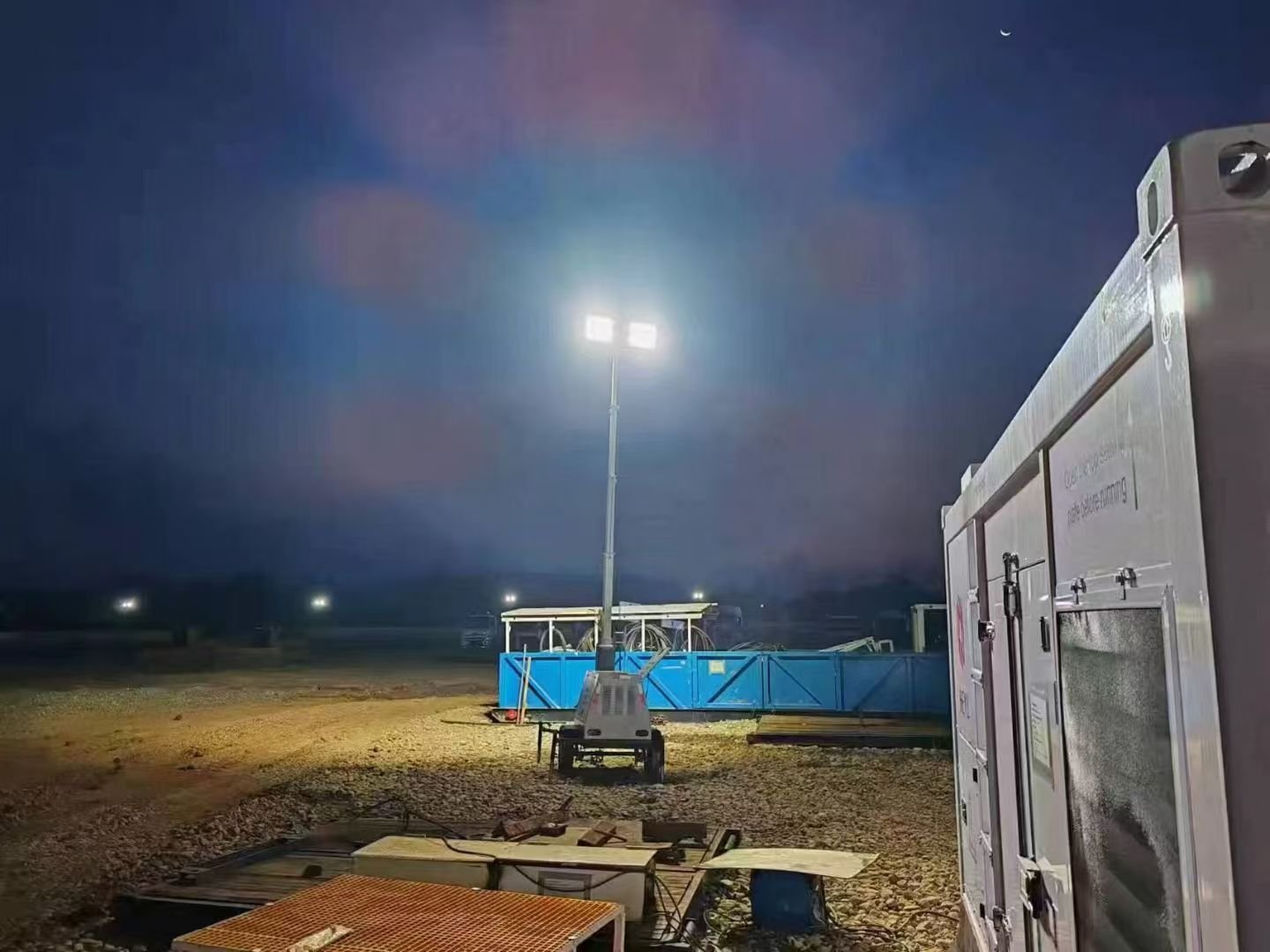
LUMTA supplied 10 D951 light towers for a mining project in Indonesia. That order used 9 m manual-winch masts, 4 × 400 W LED and 5 kW generators. The order quantity describes that delivery; it does not establish the number required at another mine.
What to send with your enquiry
- Start: destination, application and hours per night. Give an estimated quantity, or say “quantity to be reviewed.”
- Add if available: a dimensioned sketch, work zones, obstacles and possible tower positions.
- For the technical review: required illumination criteria, operating season, power access and relocation needs.
Keep proposed operating quantity separate from any spare or backup units requested for the project. Confirm both in the quotation.
Frequently asked questions
Can I divide site area by a published coverage figure?
Only use a coverage figure as an initial comparison when its illumination criteria and configuration are stated. It does not resolve obstacles, edge coverage or the positions available on your site. Review the actual layout before fixing the quantity.
Does a higher mast always mean fewer towers?
No. Height changes the light distribution, but the required illumination, optics, aiming and site geometry still determine whether the layout meets the project brief.
Can I request a quote before I know the quantity?
Yes. Describe the destination, application and hours per night, and state that the quantity needs review. Add a site sketch and illumination criteria if available so the next configuration discussion is specific.
Planning lighting for your next project?
Tell LUMTA the destination, application and hours per night. Include your estimated quantity or ask for it to be reviewed. We can discuss the configuration and the information needed for the next step.
Discuss Your Lighting RequirementsDownload Current DatasheetsReady to compare equipment? Review the mobile light tower range and shortlist the power system and lifting method for your site.