
Solar Surveillance Trailers: S973, S963 and H673
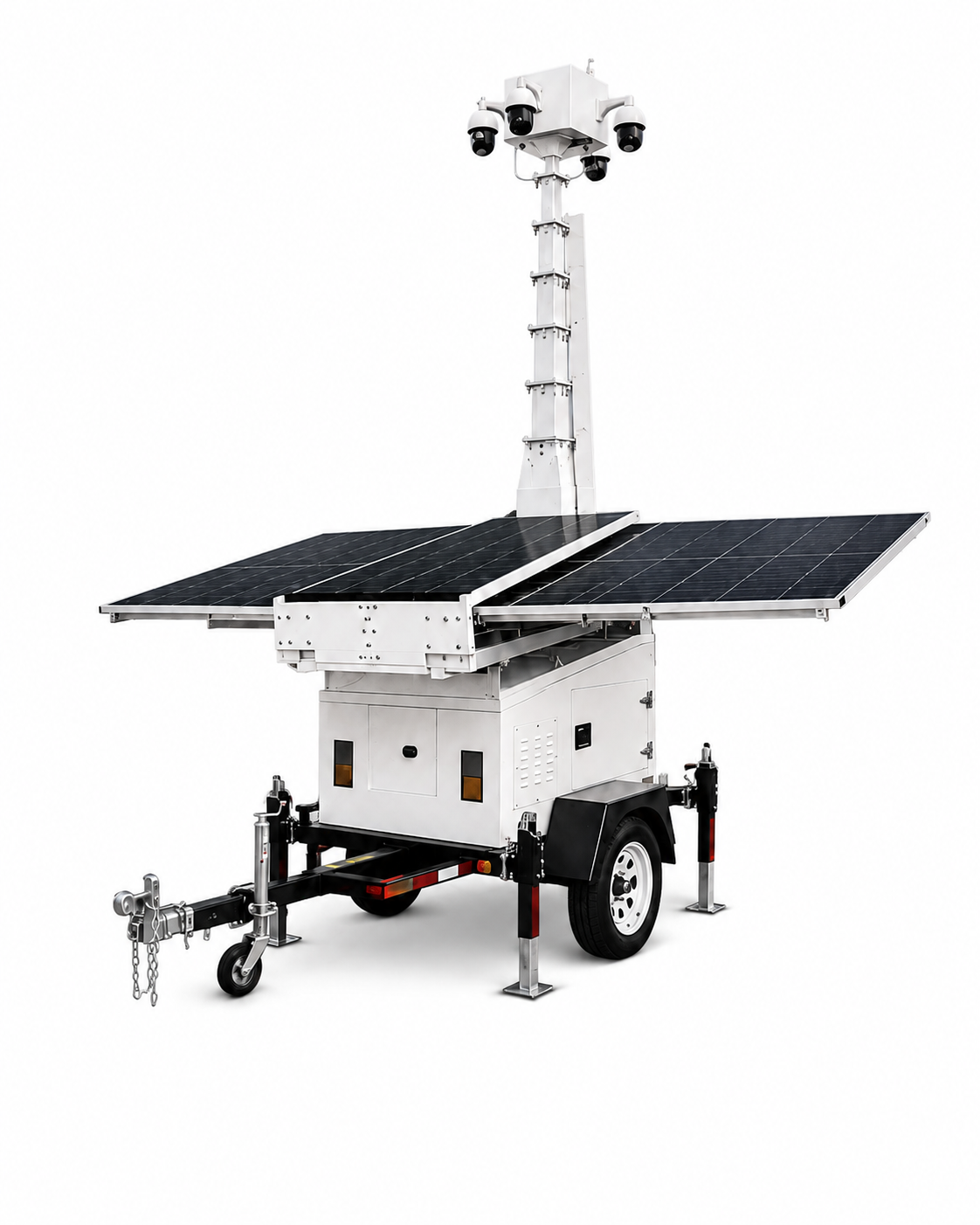
A solar surveillance trailer is a towable camera platform powered by solar panels and a battery, with a telescopic mast and 4G remote access, for sites without grid power. Choose one around the area to observe, the camera and recording requirements, and the power and communications available at the deployment site. A solar security trailer, solar CCTV trailer or solar camera trailer may describe a towable monitoring platform, but the name alone does not define the included equipment. Compare the complete proposed equipment list before deciding which model fits your project.
Use the S973 and S963 routes below to request model-specific configurations. The separate H673 route is also available for enquiry. Send your application, quantity, destination and operating schedule to start a LUMTA export quotation, even if you have not selected a model.
Compare the model-specific proposals
| Model route | What to request before comparing |
|---|---|
| S973 Solar Mobile Surveillance Trailer | The matching camera package, power configuration and included communications equipment |
| S963 Solar Surveillance Trailer | Its current technical sheet, component list, mast selection and transport details |
| H673 Solar Mobile Surveillance Trailer | Current model availability, proposed equipment scope and configuration documents |
Do not use a model name to infer camera performance or battery reserve. Ask for quotations based on the same monitoring task and operating conditions, then compare the equipment and responsibilities item by item.
Keep the S973 configuration versions separate
LUMTA's supplied S973 document describes a surveillance trailer with four PTZ cameras. That document package and the options listed on the S973 website are separate configuration references; confirm which components belong to the unit being quoted.
| Item | S973 website-listed reference | Confirm for the quotation |
|---|---|---|
| Solar panels | Three 380 W panels | Panel model, array rating and mounting arrangement |
| Battery package | Four 200 Ah batteries; gel/lithium options | Voltage, chemistry, usable energy and charging limits |
| Mast | 4–9 m; manual, electric or hydraulic options | Working height, lifting method and operating limits |
| Cameras | Dome/bullet options | Quantity, models, mounting and observation task |
| Communications | 4G control listed | Network hardware, coverage, remote access and service responsibility |
These entries describe the S973 website version, rather than a fixed specification for every order. Do not copy them into an S963 or H673 purchase specification. Request the corresponding model sheet and the written component list for each proposal.
Define the camera and recording task
Provide a site sketch showing the areas to observe, viewing distances, entrances, obstructions and night-time requirements. State whether the task is general observation, access-point monitoring or viewing a particular work area.
Identify cameras you already own and ask about mounting, power and network compatibility. Request the camera models, views, recorder, storage location, retention period and user-access functions in the proposed supply list. Include any alerts, auxiliary lights, speakers or response requirements as separate items for review.
Use the site survey checklist to organize the information. If permanent cameras already cover part of the site, compare the mobile trailer and fixed CCTV options before defining the deployment scope.
Agree connectivity and ongoing service responsibilities
Check coverage at the intended deployment position and confirm the proposed router, antenna, network compatibility and remote-access method. Identify who provides the SIM, data plan, software licences and any recurring subscriptions.
Ask what happens to recording and user access when the network connection is unavailable. Specify local recording, remote viewing and retention needs separately, then request confirmation of the supported arrangement. Include any proposed alternative connection in the power and compatibility review.
The quotation should identify the equipment supplier and the parties responsible for installation, commissioning, monitoring and response. Request any local rental or staffed monitoring service expressly; a mobile security trailer enquiry alone does not define those services. Read the 4G connectivity and offline recording guide for the next discussion.
Match the energy package to the monitoring load
List the cameras, recorder, router and auxiliary equipment, with their operating hours and power requirements. Provide the location, season, shading conditions and the reserve period you need when solar charging is insufficient.
Request battery voltage and usable energy alongside capacity in amp-hours. Ask for an estimate that states the connected loads, charging assumptions and reserve conditions. Check whether external charging or backup is included in the proposed package.
Lighting-runtime figures in the supplied S973 document do not establish the operating hours of its surveillance equipment. Use a monitoring-specific load list and the battery-runtime guide to prepare your request, rather than treating a lighting reference or a battery label as a guaranteed unattended period.
Confirm the site, mast and relocation requirements
State the working height, camera load, lifting preference, deployment frequency and available access. Include ground conditions, wind exposure, temperature, dust, humidity and coastal conditions in the request.
Obtain the quoted unit's dimensions, weight, stabilizer arrangement, handling points and transport requirements. Confirm the unloading method and who will perform setup. Request the operating instructions and limits applicable to the supplied mast and trailer before deployment.
Use the installation guide and maintenance checklist to prepare questions. Operation should follow the manuals supplied for the actual equipment.
Compare equipment and supply responsibilities together
Ask each proposal to distinguish included equipment, optional items, customer-supplied components and work assigned to another provider.
| Supply area | Items to identify in writing |
|---|---|
| Platform and power | Trailer, mast, solar array, battery, charging and backup equipment |
| Video and network | Cameras, mounts, recorder, storage, router, antenna and remote-access functions |
| Services | SIM and data, software, commissioning, installation, monitoring and response |
| Documents and handover | Manuals, agreed checks, packing records, destination documents and spare-parts information |
| Commercial terms | Price basis, delivery responsibilities, lead time, warranty scope and support |
Check documents for the named equipment and destination. A company certificate or a general product description should not be substituted for the documents required for the supplied system. Review the surveillance trailer price factors when aligning quotations.
Prepare a project-specific quotation request
- Give the country, destination, application and quantity.
- Describe the monitored area, viewing distances, camera requirements and recording period.
- State available network coverage, required access and service responsibilities.
- Include operating hours, connected loads, solar conditions and the reserve target.
- Add mast preferences, relocation frequency, unloading arrangements and the requested delivery date.
A short project brief is enough to begin. Request the model-specific component list and confirm the remaining technical and commercial details before ordering. Use the surveillance trailer selection guide if the model is still undecided.
Solar surveillance trailer questions
What is the difference between a solar surveillance trailer and a solar CCTV tower?
A solar surveillance trailer describes a towable monitoring platform powered by solar panels and batteries. Solar CCTV tower emphasizes the raised camera function. Suppliers may use either term for a similar system, so compare the trailer, mast, cameras, recording, connectivity and power package in the written quotation.
Request a Solar Surveillance Trailer Quote
Send your application, quantity, destination and operating schedule. Add S973, S963, H673 or an undecided-model request, and include any camera or network equipment you already have.